Skip to book content
United We TransformCreate teamsGrade your agenda
Chapter 7 · canonical pages 157-173

UWT in Action - Learning from Experiments in the Real World

Pressure-tests UWT across real organizational challenges in academia, nonprofit service, global health, enterprise strategy, executive alignment, cybersecurity education, and healthcare innovation. The cases show Cognitors using AI to improve knowledge access, stakeholder coordination, expert capacity, shared sensemaking, and implementation speed.

The chapter in four ideas.

Concise companion summaries with canonical source pages.

Key idea

UWT experiments begin with a concrete Situation and Complication, then design a human-AI Resolution around the relevant canvas elements.

Source page 158, 170

Key idea

Across sectors, AI creates value by synthesizing knowledge, making complex systems visible, mapping stakeholders, and scaling scarce expertise.

Source page 159, 170

Key idea

The Cognitor converts AI capability into organizational outcomes through question framing, curation, interaction design, critical synthesis, and narrative weaving.

Source page 165, 167

Key idea

Each resolution is a learning moment rather than a final endpoint, reinforcing UWT as an iterative operating system.

Source page 171, 173

Frameworks named in the chapter.

Use these as an orientation layer before the diagrams and practice prompts.

Named framework

Situation-Complication-Resolution

The narrative structure used to present each experiment’s context, barrier, and UWT-enabled response.

Source page 158, 170

Named framework

Cognitor’s Core Competencies

Strategic Question Framing, Data & Tool Curation, Human-AI Interaction Design, Critical Evaluation & Synthesis, and Narrative Weaving.

Source page 165, 167

Practitioner toolkit.

Three immediate actions, three AI levers, and three critical reflection questions exactly as structured in the chapter.

Immediate actions

  1. Select the one experiment from this chapter that most closely mirrors a current challenge or strategic priority your team is facing. In your next team meeting, briefly present the "Situation" and "Complication" from that scenario and facilitate a 15-minute discussion on its parallels to your own situation.
  2. Identify a current project in your organization that is struggling due to a lack of clear data-driven insights or an inefficient process. Drawing inspiration from the chapter's examples, brainstorm with a colleague how a "Cognitor-led" approach might unlock progress or offer a new, valuable perspective.
  3. Choose one of the "Resolutions" in the experiments (e.g., accelerating policy development, enhancing cybersecurity, aligning leadership). List three specific, high impact questions a Cognitor would need to ask of both humans and AI to begin tackling a similar problem in your organizational context.

AI levers

  1. AI for Deep Knowledge Synthesis: As seen in the Policy Development and Strategic Decision-Making scenarios, identify one area where a lack of accessible, synthesized knowledge is a major bottleneck for your team. Experiment with using AI to research and summarize a complex topic to provide a shared, data-informed foundation for a discussion.
  2. AI as an Expert Augmentation Co-Pilot: Reflect on the Service Scaling and Cybersecurity examples where AI augmented experts. Identify one highly skilled role in your team that is currently bogged down by routine data analysis or monitoring. Explore AI tools that could act as a "co-pilot" to handle these tasks, freeing up the expert for higher-value judgment and action.
  3. AI for Stakeholder & Ecosystem Mapping: Inspired by the "Connecting a Movement" and "Curriculum Co-Creation" scenarios, use AI research tools to analyze and map the key players, influencers, and data sources within your own professional ecosystem or for a specific stakeholder group, revealing new opportunities for collaboration or engagement.

Critical reflection questions

  1. Beyond the specific sectors presented, what are the underlying patterns of UWT application (e.g., AI for accelerating knowledge work, AI for making systems transparent, AI for scaling human expertise) that are most relevant to the core challenges our organization faces today?
  2. Considering the various resolutions in this chapter, what is the most significant "Reset Mindset" shift required for our team or leadership to move from simply using AI tools to truly partnering with AI in the co-design of solutions and processes?
  3. What is the single biggest barrier (e.g., data accessibility, cultural resistance, lack of Cognitor-like skills) in our organization that would prevent us from successfully implementing a UWT experiment similar to those described, and what is one concrete step we could take to begin addressing it?

Figures and visual models.

Every associated framework is available at source resolution.
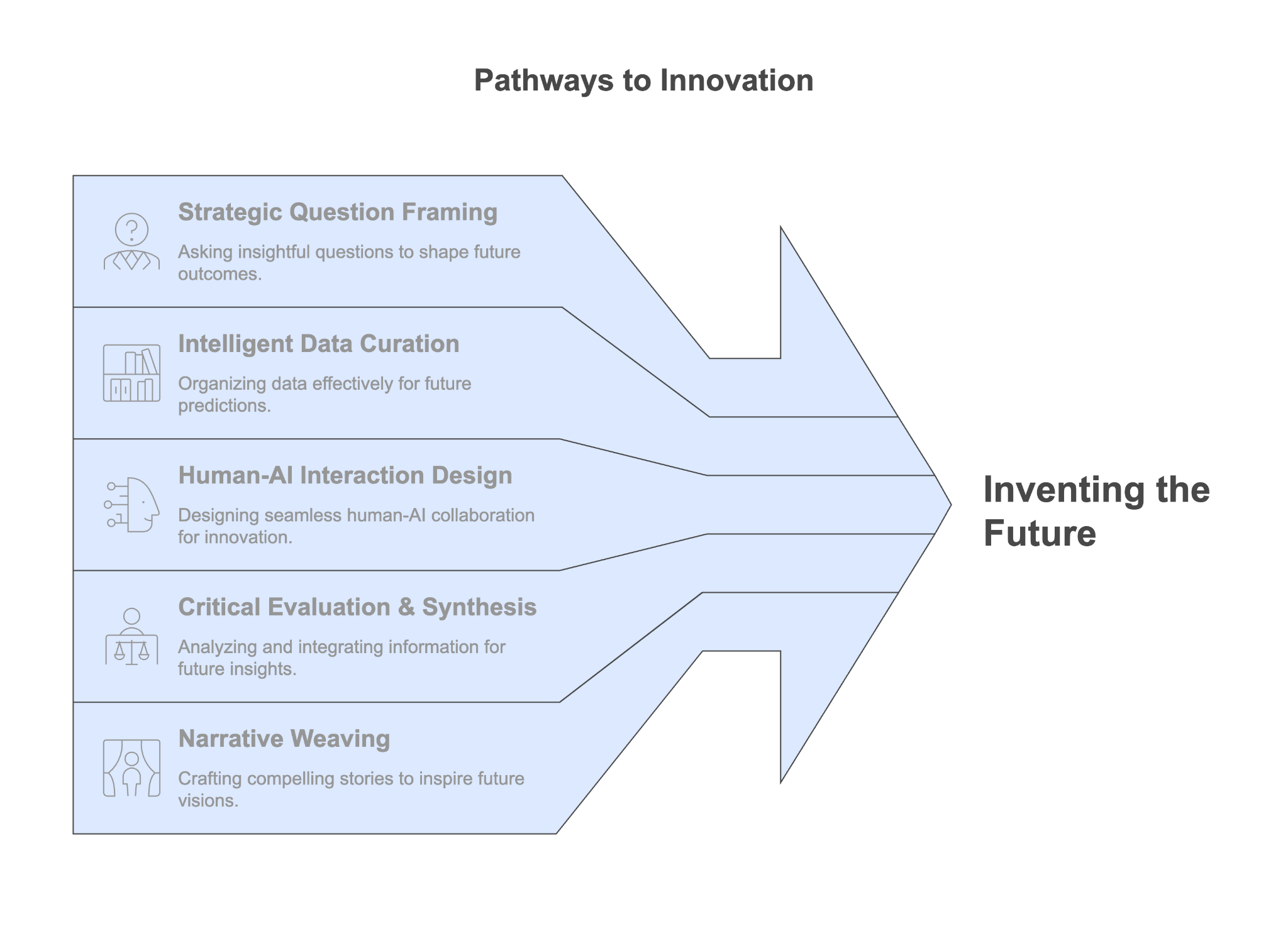
Figure 7.1: The Cognitor’s Core Competencies

Figure 7.1: The Cognitor’s Core Competencies

Canonical manuscript page 167

Source boundary: this companion derives from canonical manuscript pages 157-173. It publishes practice material and selected brief excerpts, not the complete chapter prose or manuscript PDF.