Skip to book content
United We TransformCreate teamsGrade your agenda
Chapter 6 · canonical pages 137-156

The Rise of the Cognitor - Architecting Human-AI Symbiosis

Defines the Cognitor as the architect and facilitator of human-AI symbiosis. It traces the role’s lineage, details its core value areas and mindset, shows how Cognitors choreograph STACK and Scan-Focus-Act cycles, describes a practical technology palette, and outlines a deliberate development journey.

The chapter in four ideas.

Concise companion summaries with canonical source pages.

Key idea

The Cognitor evolves the knowledge-worker role from producing answers individually to orchestrating intelligence across people and AI.

Source page 138, 142

Key idea

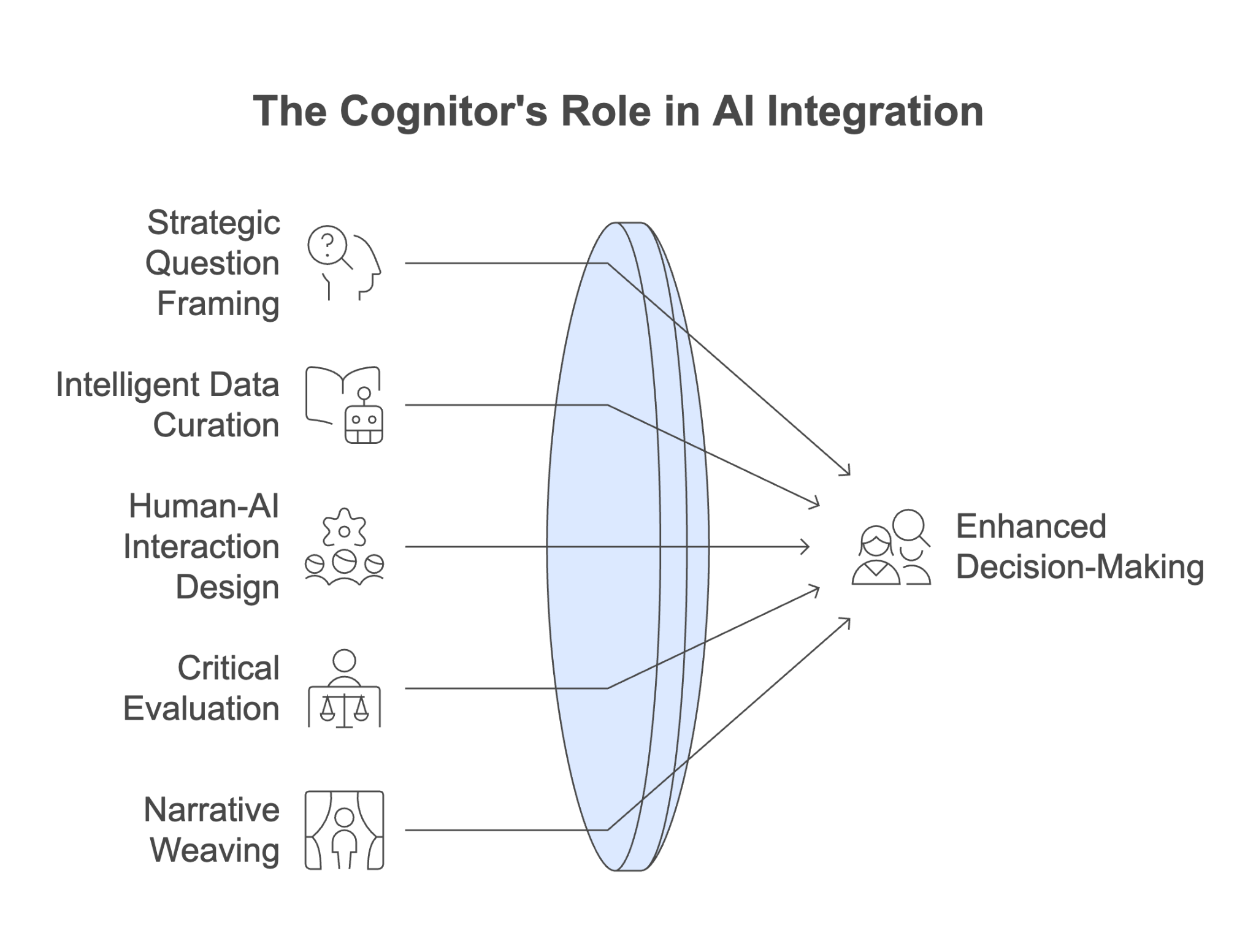
Cognitor value rests on strategic question framing, data and tool curation, human-AI interaction design, critical synthesis, and narrative weaving.

Source page 141, 142

Key idea

The role requires curiosity, humility, critical thinking, comfort with ambiguity, ethical stewardship, and collaborative prowess.

Source page 142, 144

Key idea

Cognitors build adaptive collaboration flows and select technology according to purpose, not novelty.

Source page 144, 149

Key idea

Capability develops through assessment, personalized learning, practical application, mentorship, reflective feedback, and ethical grounding.

Source page 151, 153

Frameworks named in the chapter.

Use these as an orientation layer before the diagrams and practice prompts.

Named framework

Five Cognitor Value Areas

Strategic Question Framing; Intelligent Data & Tool Curation; Human-AI Interaction Design; Critical Evaluation & Synthesis; and Narrative Weaving & Communication.

Source page 141, 142

Named framework

Cognitor Mindset

A shift from individual knowing toward curiosity, orchestration, critical thinking, iterative work in ambiguity, ethical stewardship, and collaborative prowess.

Source page 142, 144

Named framework

Scan-Focus-Act Cycles

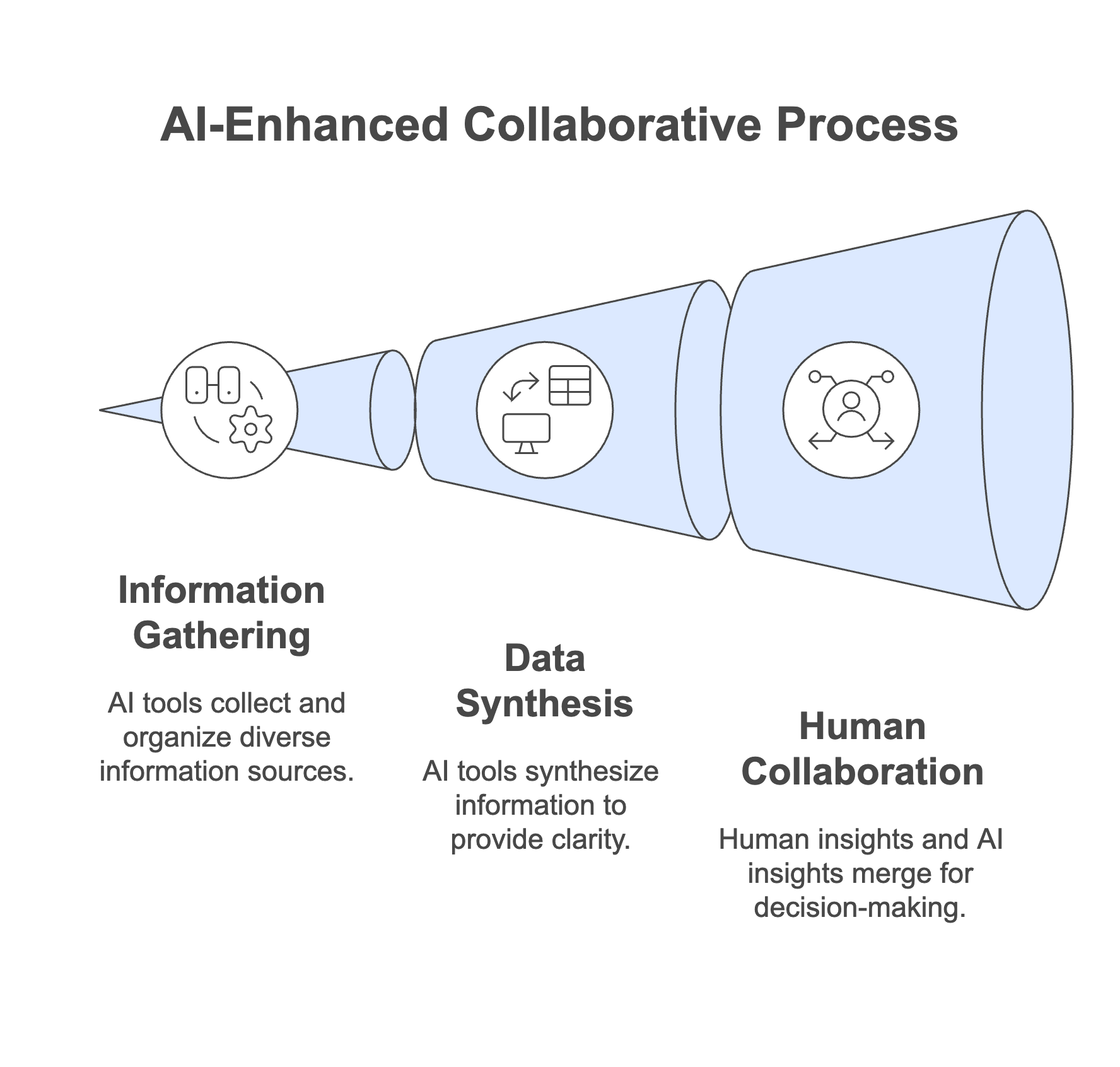
Rapid micro-cycles within AI-augmented STACK work: scan broadly, focus collective attention, and act with fast feedback and iteration.

Source page 145, 146

Named framework

Cognitor’s Tech Palette

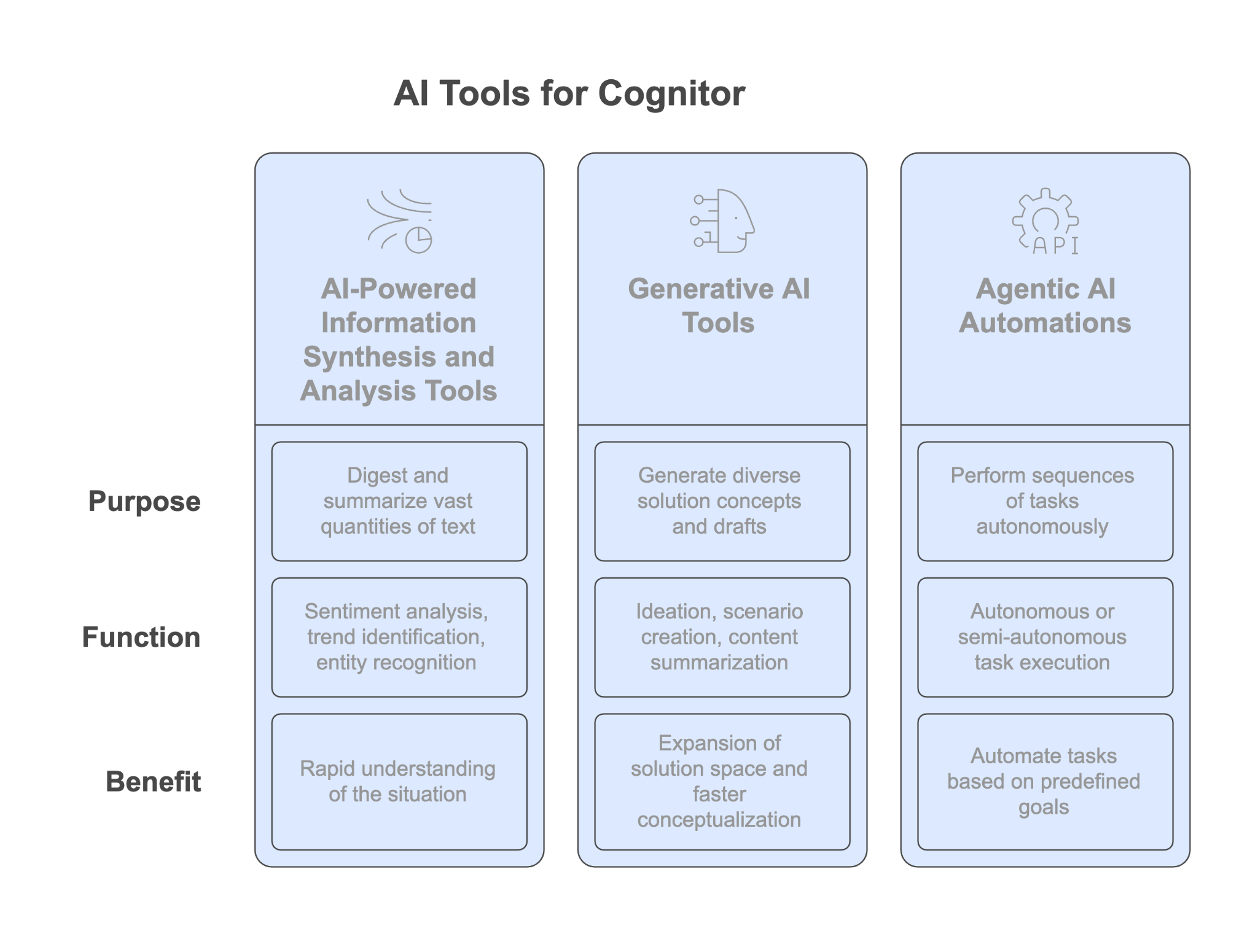
A purpose-led mix of AI synthesis and analysis, generative AI, agentic automation, AI-enabled collaboration platforms, and ethics/governance tools.

Source page 147, 149

Named framework

The Deliberate Path

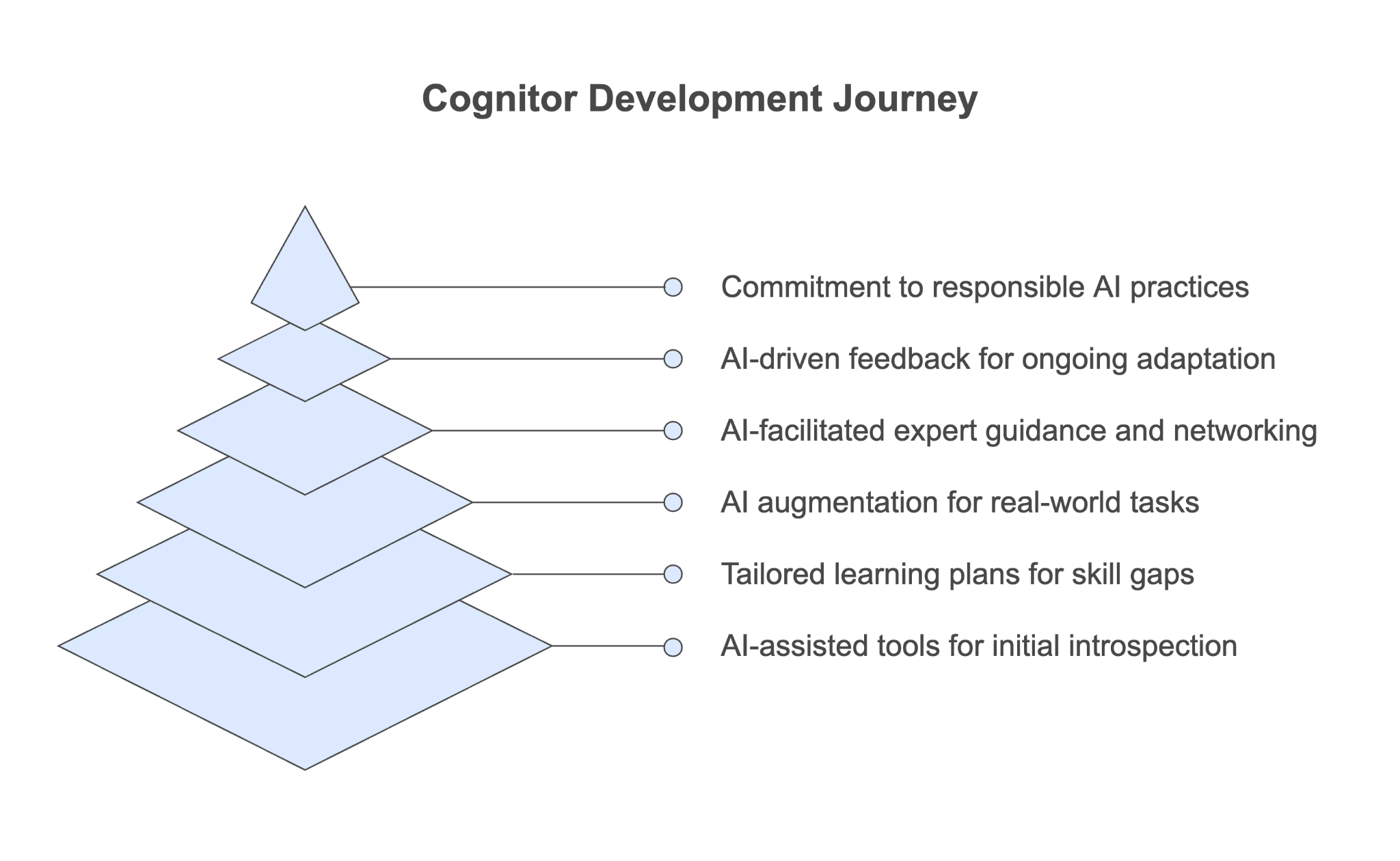
An AI-assisted Cognitor development journey spanning discovery, self-assessment, personalized learning, practical application, mentorship and community, continuous evolution, and responsible practice.

Source page 151, 153

Practitioner toolkit.

Three immediate actions, three AI levers, and three critical reflection questions exactly as structured in the chapter.

Immediate actions

  1. Mindset Self-Check: Review the "Cognitor mindset" priorities (e.g., Orchestration over Origination, Comfort with Ambiguity). Identify one attribute you personally want to strengthen and one small action you can take this week to practice it (e.g., consciously deferring to an AI-generated summary before offering your own analysis).
  2. Process Choreography Sketch: Take a recent team decision or a small part of a solution design process. Briefly sketch how a Cognitor might have structured it differently using a simple Scan-Focus-Act cycle, identifying where AI could have played a role.
  3. Tech Palette Exploration: Choose one category from "The Cognitor's Tech Palette" (e.g., generative AI, agentic automation). Dedicate 30 minutes to research one new tool in that category and consider how it could specifically help in orchestrating a human-AI collaborative task.

AI levers

  1. AI for Strategic Question Framing Practice: Use an AI writing assistant or chatbot as a sparring partner. Feed it a complex problem statement and ask it to help you generate 5-10 diverse, high-impact strategic questions a Cognitor might pose to a team or another AI.
  2. AI for Simulating Human-AI Interaction Design: For a hypothetical project, use AI (even a simple flowchart tool guided by AI suggestions) to map out a potential human-AI workflow, defining touchpoints, data handoffs, and where human critical evaluation of AI output is essential.
  3. AI for Personalized Cognitor Development (Ref: "The Deliberate Path"): Encourage aspiring Cognitors to use AI-powered learning platforms to identify personalized courses or resources focusing on their specific skill gaps (e.g., data literacy, prompt engineering, AI ethics) as outlined in their "Discovery & Self-Assessment."

Critical reflection questions

  1. Considering the five value areas of the Cognitor (e.g., Strategic Question Framing, Narrative Weaving), which one currently represents the biggest capability gap within our team or organization when it comes to effectively leveraging AI?
  2. How can our organization best support "The Deliberate Path" to cultivating Cognitors, moving beyond ad-hoc AI training to a more structured approach that includes practical application, mentorship, and community building?
  3. What are the primary cultural or structural barriers within our organization that might hinder individuals from fully embracing the "Mindset Shift: From Knowing to Orchestrating Knowing" essential for the Cognitor role, and how can leadership address them?

Figures and visual models.

Every associated framework is available at source resolution.
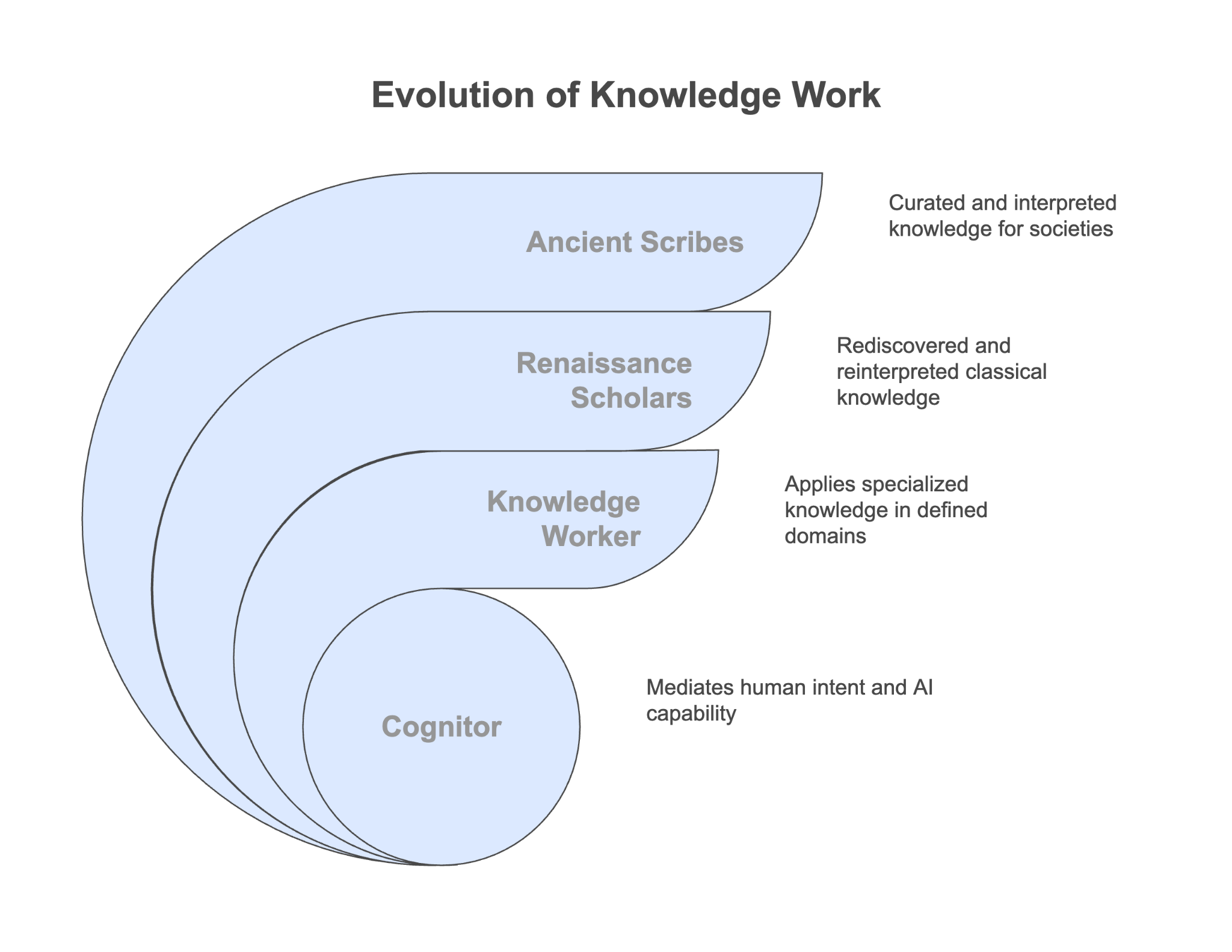
Figure 6.1: The Evolution of the Cognitor

Figure 6.1: The Evolution of the Cognitor

Canonical manuscript page 140
Figure 6.2: The Cognitor’s Role in AI Integration

Figure 6.2: The Cognitor’s Role in AI Integration

Canonical manuscript page 142
Figure 6.3: The AI-enhanced Collaborative Process

Figure 6.3: The AI-enhanced Collaborative Process

Canonical manuscript page 145
Figure 6.4: The Cognitor’s Toolset

Figure 6.4: The Cognitor’s Toolset

Canonical manuscript page 148
Figure 6.5: The Cognitor’s Development Journey

Figure 6.5: The Cognitor’s Development Journey

Canonical manuscript page 151

Source boundary: this companion derives from canonical manuscript pages 137-156. It publishes practice material and selected brief excerpts, not the complete chapter prose or manuscript PDF.