Skip to book content
United We TransformCreate teamsGrade your agenda
Chapter 5 ยท canonical pages 123-136

The Choreography of Collaboration - Augmenting Solution Design

Applies human-AI collaboration to solution design from empathy and requirements through ideation, research, prototyping, feasibility, and refinement. AI expands the solution space and accelerates iteration; humans continue to frame the vision, curate possibilities, assess context, and protect human-centered intent.

The chapter in four ideas.

Concise companion summaries with canonical source pages.

Key idea

AI can surface user needs and structure requirements from large volumes of qualitative and operational evidence.

Source page 124, 126

Key idea

Generative AI and deep research broaden ideation, but human sensemaking determines which possibilities are relevant, coherent, and valuable.

Source page 126, 130

Key idea

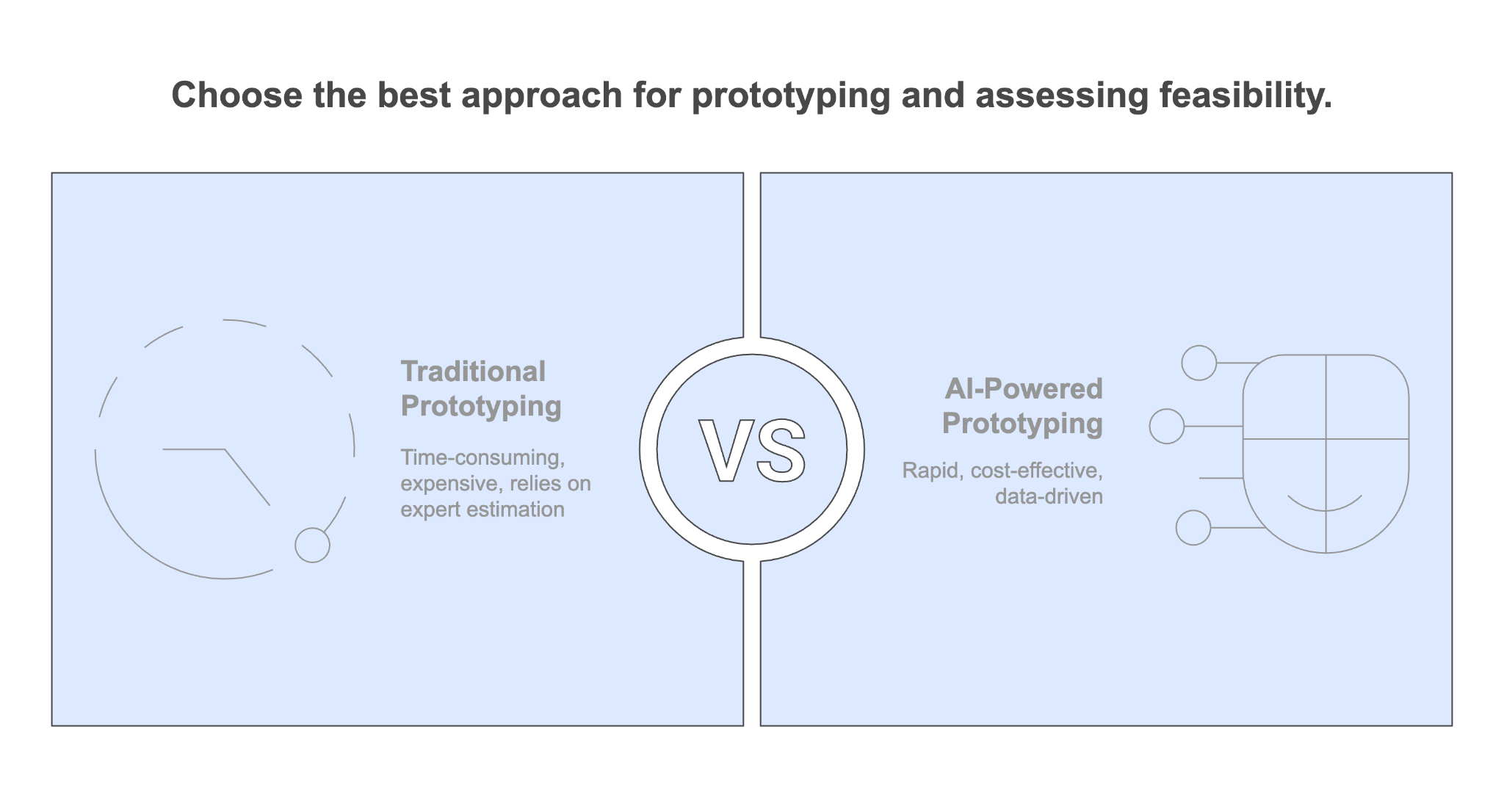
AI-enabled prototyping and simulation reduce the cost and time of testing assumptions before major investment.

Source page 130, 132

Key idea

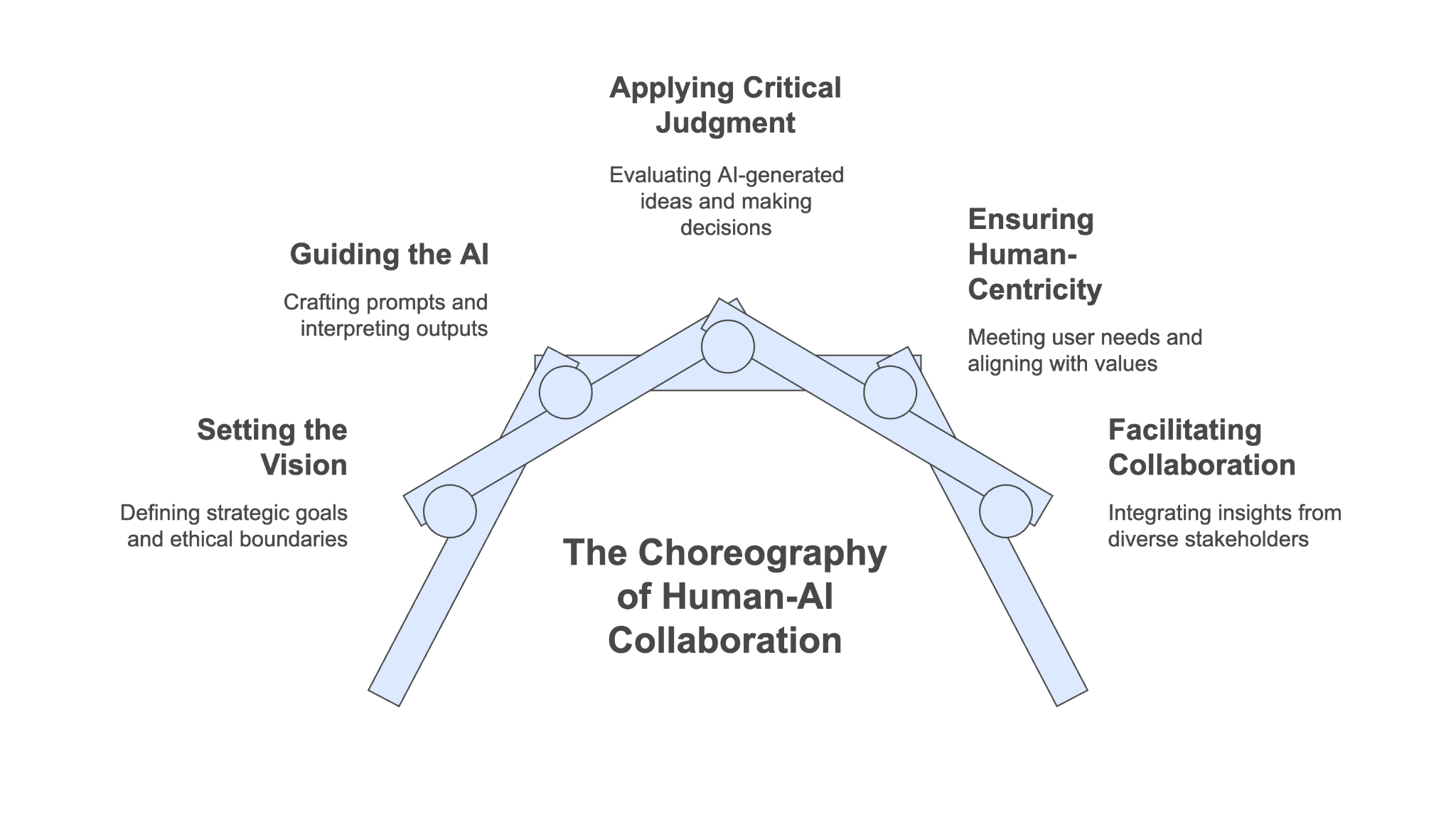
The human lead sets vision, guides AI, applies critical judgment, ensures human-centricity, and facilitates collaboration.

Source page 132, 133

Frameworks named in the chapter.

Use these as an orientation layer before the diagrams and practice prompts.

Named framework

AI-Augmented Solution Design Cycle

A design flow that uses AI to strengthen empathy, requirements, ideation, research, prototyping, feasibility analysis, optimization, and detailing under human direction.

Source page 124, 133

Named framework

AI-Driven Requirements Enhancement Cycle

An iterative requirements loop that uses AI to analyze inputs, expose gaps, clarify constraints, and refine a shared specification.

Source page 125, 126

Named framework

Human Curation of AI-Generated Possibilities

A sensemaking discipline for evaluating, combining, and elevating generated ideas instead of treating volume as innovation.

Source page 128, 130

Practitioner toolkit.

Three immediate actions, three AI levers, and three critical reflection questions exactly as structured in the chapter.

Immediate actions

  1. For your next solution design initiative, before any human brainstorming, assign one team member to conduct focused "AI Deep Research" on existing solutions, user pain points, and relevant emerging technologies for that specific problem space.
  2. In your next ideation session, after initial human idea generation, introduce one AI-generated concept (created via astute prompting) as a "wild card" to deliberately stretch the team's thinking and spark new connections.
  3. Select one aspect of a current solution blueprint that requires meticulous detailing or checking for consistency (e.g., user interface guidelines, technical specifications). Task a team member (acting in a Cognitor capacity) to explore if an AI tool could assist in this refinement task.

AI levers

  1. AI for Amplifying Empathy: Utilize NLP-based AI tools to analyze large volumes of unstructured user feedback (e.g., survey responses, online reviews, support chat logs) to quickly identify common pain points, unmet needs, and sentiment trends, providing a rich, data-driven foundation for design.
  2. AI for Diverse Ideation & Concept Generation: Employ generative AI tools with well-crafted prompts (that include defined user needs, constraints, and desired attributes) to rapidly produce a wide spectrum of initial solution concepts, visual mockups, or user flow diagrams to broaden the creative exploration space.
  3. AI for Rapid Prototyping & Feasibility Simulation: Leverage AI-powered low-code platforms to quickly build interactive digital prototypes for early user testing, and/or use AI simulation tools to model the potential performance, resource requirements, or system interactions of a proposed solution before significant investment.

Critical reflection questions

  1. Considering the different stages of solution design (empathy, requirements, ideation, prototyping, refinement), where does our team currently experience the most significant bottlenecks or limitations that AI augmentation could most effectively address?
  2. As we integrate AI more deeply as an "ideation partner," what specific prompting strategies and human-led "sensemaking" processes do we need to develop to ensure we are not just generating many ideas, but are effectively curating, combining, and elevating them into truly innovative and viable solutions?
  3. What is the most critical mindset shift required for our designers and engineers to move from viewing AI as a simple automation tool to embracing it as a genuine creative collaborator in the design ensemble, under the guidance of a Cognitor?

Figures and visual models.

Every associated framework is available at source resolution.
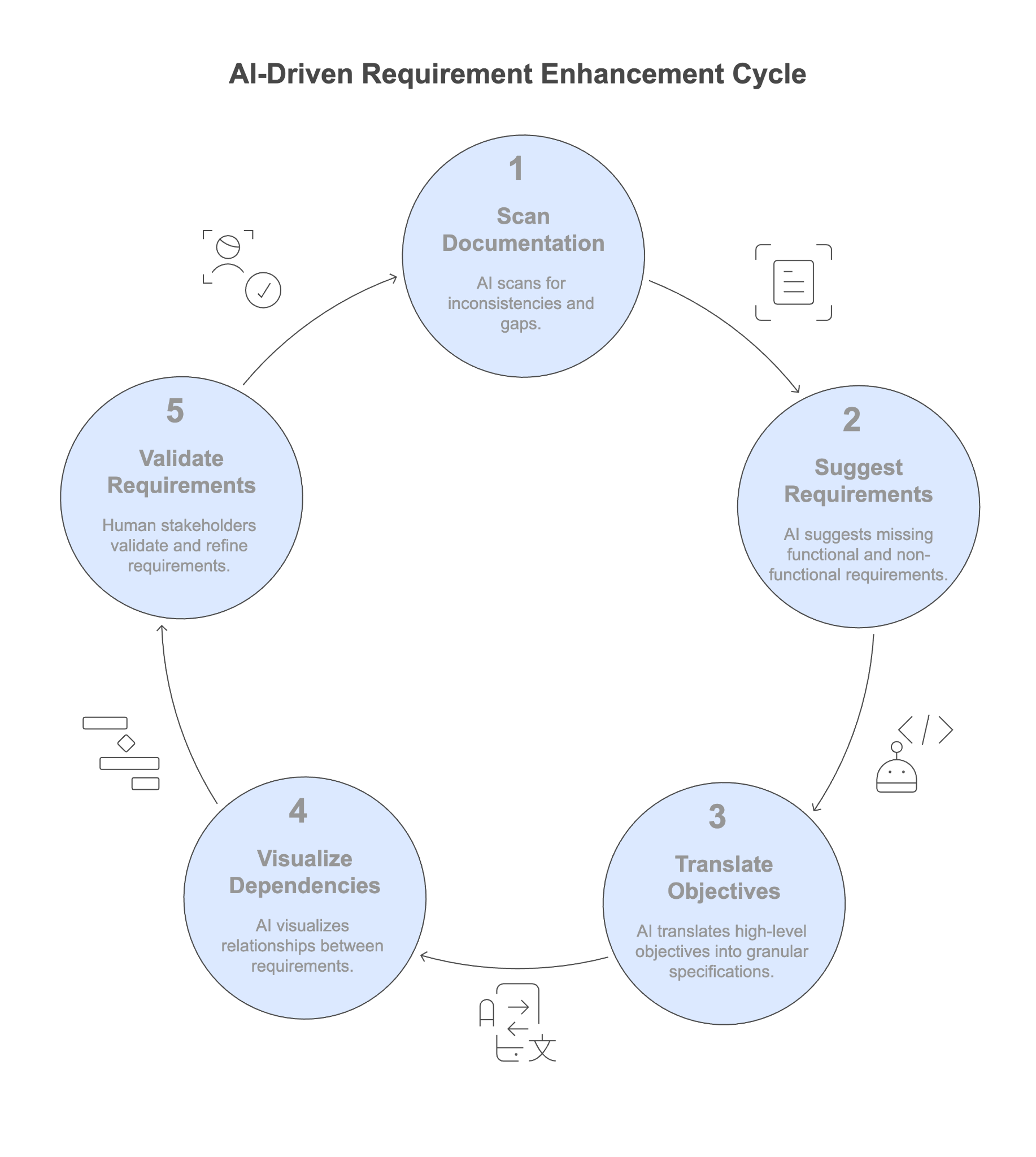
Figure 5.1: AI-driven Requirements Enhancement Cycle

Figure 5.1: AI-driven Requirements Enhancement Cycle

Canonical manuscript page 126
Figure 5.2: Prototyping Comparison

Figure 5.2: Prototyping Comparison

Canonical manuscript page 131
Figure 5.3: AI-augmented Design Process Cycle

Figure 5.3: AI-augmented Design Process Cycle

Canonical manuscript page 132

Source boundary: this companion derives from canonical manuscript pages 123-136. It publishes practice material and selected brief excerpts, not the complete chapter prose or manuscript PDF.