Skip to book content
United We TransformCreate teamsGrade your agenda
Chapter 4 · canonical pages 103-122

The Augmented Collaborator - AI Agents and the Dawn of Clear Decision-making at Scale

Explains how AI agents can augment the full decision lifecycle rather than merely automate isolated tasks. It maps complementary human and AI responsibilities across sensing, research, option generation, evaluation, commitment, and learning while preserving human accountability.

The chapter in four ideas.

Concise companion summaries with canonical source pages.

Key idea

AI augmentation can increase capacity, decision velocity, rigor, innovation speed, personalization, and access to expertise.

Source page 104, 107

Key idea

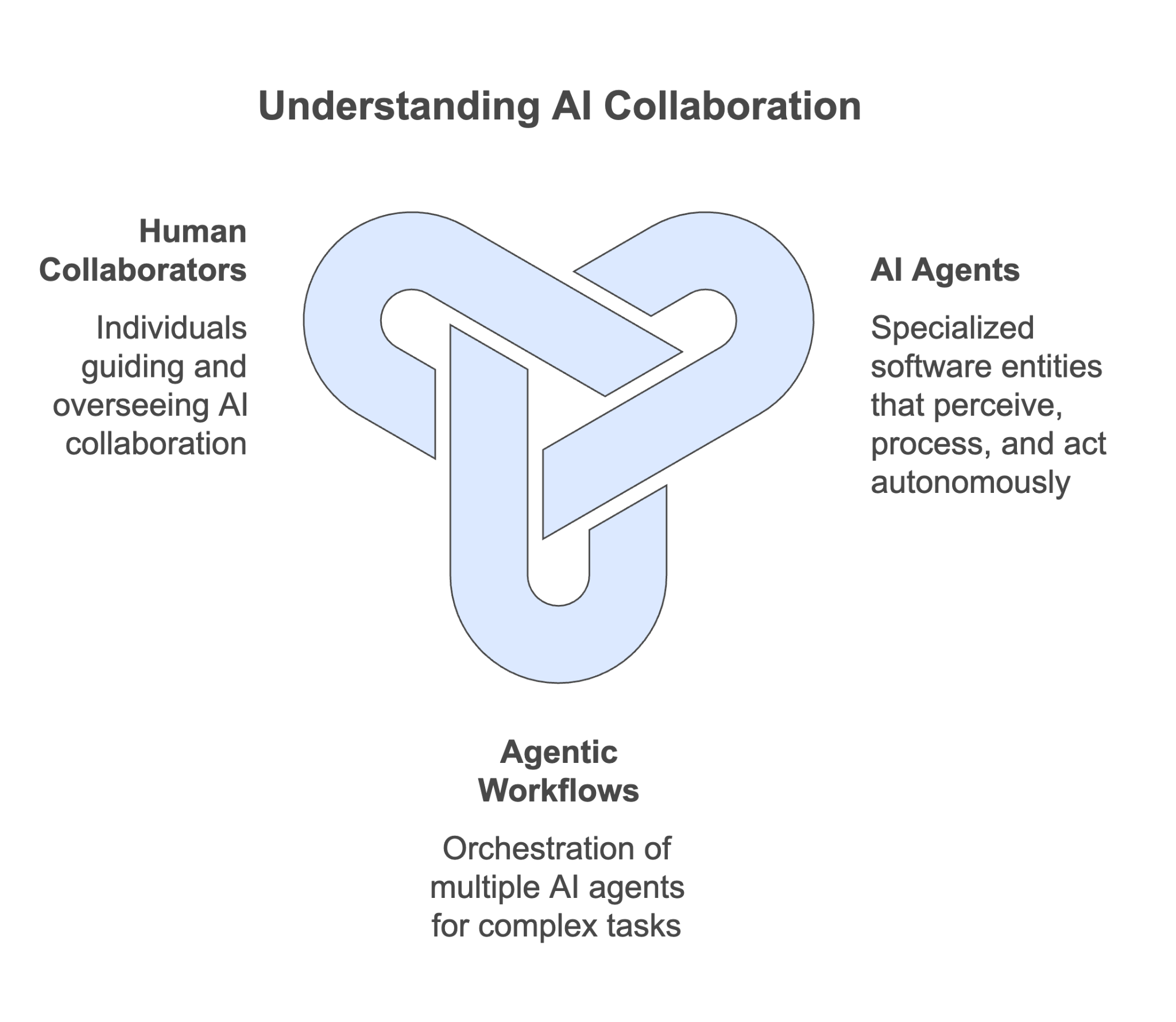
Agentic workflows link goal-directed AI tasks into a decision process while humans supply intent, context, ethics, and final judgment.

Source page 107, 109

Key idea

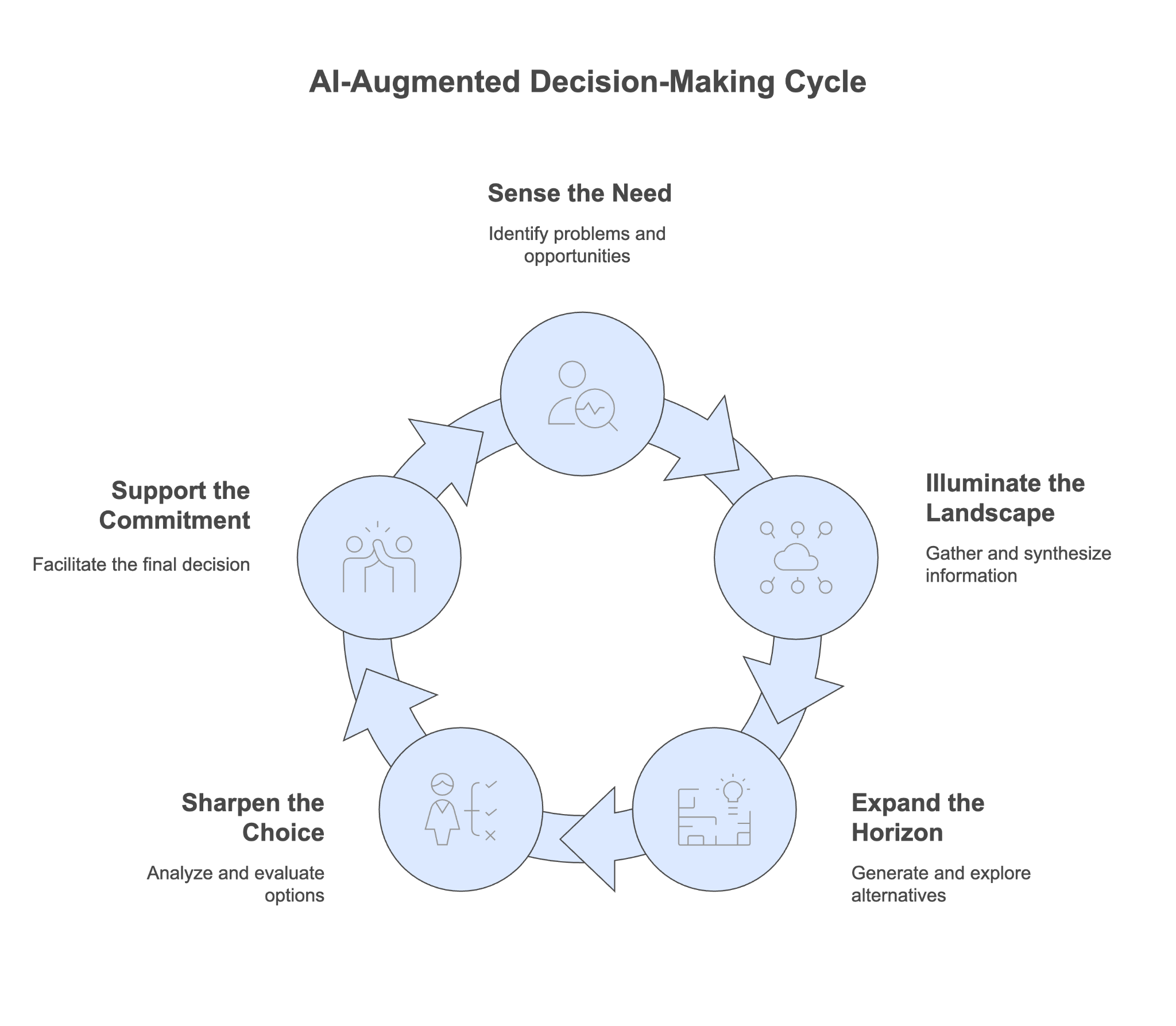
Each stage of decision-making offers distinct augmentation opportunities, from weak-signal detection through commitment support.

Source page 109, 114

Key idea

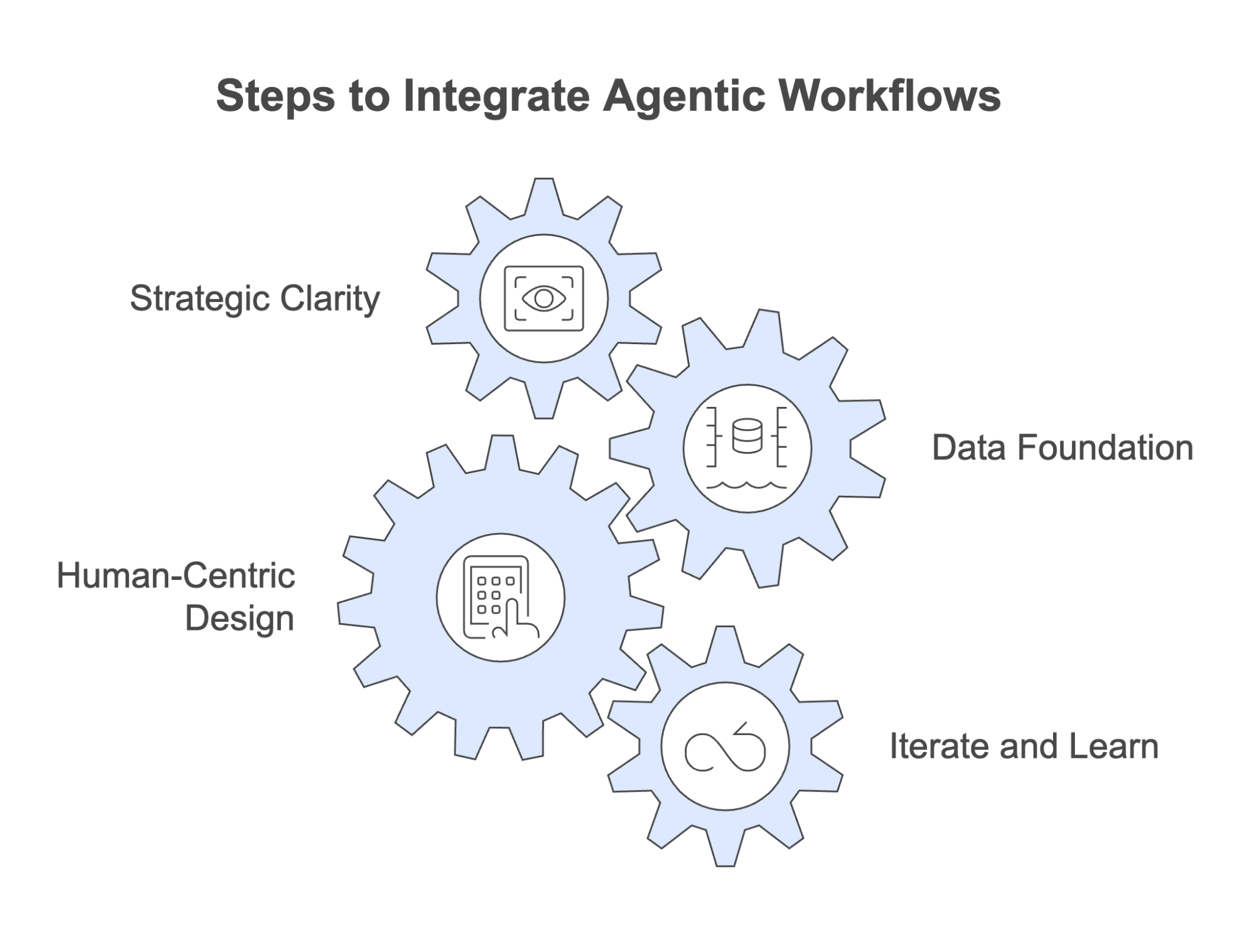
Effective integration requires workflow design, explainability, governance, feedback, and deliberate development of human critical-thinking capabilities.

Source page 114, 119

Frameworks named in the chapter.

Use these as an orientation layer before the diagrams and practice prompts.

Named framework

Grounded Benefits of AI Augmentation

Five benefit areas: amplified human capacity and focus, enhanced decision velocity and rigor, accelerated design and innovation cycles, operational scale and personalization, and democratized expertise and knowledge.

Source page 104, 107

Named framework

Anatomy of Decision-making

A five-stage decision lifecycle: Sensing the Need, Illuminating the Landscape, Expanding the Horizon, Sharpening the Choice, and Supporting the Commitment.

Source page 109, 114

Named framework

Integrated Agentic Workflows

Coordinated AI tasks embedded across a broader human-led decision process with defined handoffs, oversight, and learning loops.

Source page 114, 117

Practitioner toolkit.

Three immediate actions, three AI levers, and three critical reflection questions exactly as structured in the chapter.

Immediate actions

  1. Identify One “Augmentation Opportunity”: Select one upcoming team decision. Review the “Anatomy of Decision-making” stages (Sensing Need, Illuminating Landscape, Expanding Horizon, Sharpening Choice, Supporting Commitment). Pinpoint one stage where AI assistance could most significantly improve your current process.
  2. “Agentic Workflow” Brainstorm (Small Scale): Think of a recurring information-gathering task your team performs for decision support (e.g., weekly competitor news roundup). Sketch a simple “agentic workflow” where an AI agent might automate parts of the data collection or initial synthesis.
  3. Critique an AI Output: Find a piece of AI-generated analysis or a recommendation (even from a public tool). As a team, practice “The Indispensable Human” role by critically evaluating its strengths, weaknesses, potential biases, and the human judgment needed to use it responsibly in a decision.

AI levers

  1. AI for “Illuminating the Landscape”: For your next strategic discussion, assign a team member to use AI research agents or NLP tools to gather and synthesize a broad range of information (market data, customer feedback, internal reports) to provide a comprehensive, data-rich situational overview before human deliberation begins.
  2. AI for “Expanding the Horizon”: When facing a complex problem requiring a novel solution or decision, use generative AI tools with carefully structured prompts to generate a diverse set of initial alternative options or scenarios that go beyond the team’s immediate thinking.
  3. AI for “Sharpening the Choice”: When comparing a shortlist of decision alternatives, explore using AI tools to help structure the analysis-for example, by creating a weighted scoring model based on agreed criteria, or by summarizing the pros and cons of each option based on available data.

Critical reflection questions

  1. Considering the “Grounded Benefits of AI Augmentation” (Amplified Capacity, Enhanced Velocity/Rigor, Accelerated Cycles, Scale/Personalization, Democratized Expertise), which of these benefits would deliver the most immediate and significant value to our team’s current decision-making challenges?
  2. As we begin to “Demystify the Digital Teammate” and explore AI agents, what is the biggest mindset shift or skill gap our team needs to address to effectively collaborate with and trust these “agentic workflows” in decision support?
  3. Reflecting on “The Indispensable Human” role in leading augmented teams, how can we ensure that as AI takes on more analytical tasks, we are actively developing our team’s critical thinking, ethical judgment, and strategic synthesis capabilities to effectively partner with AI?

Figures and visual models.

Every associated framework is available at source resolution.
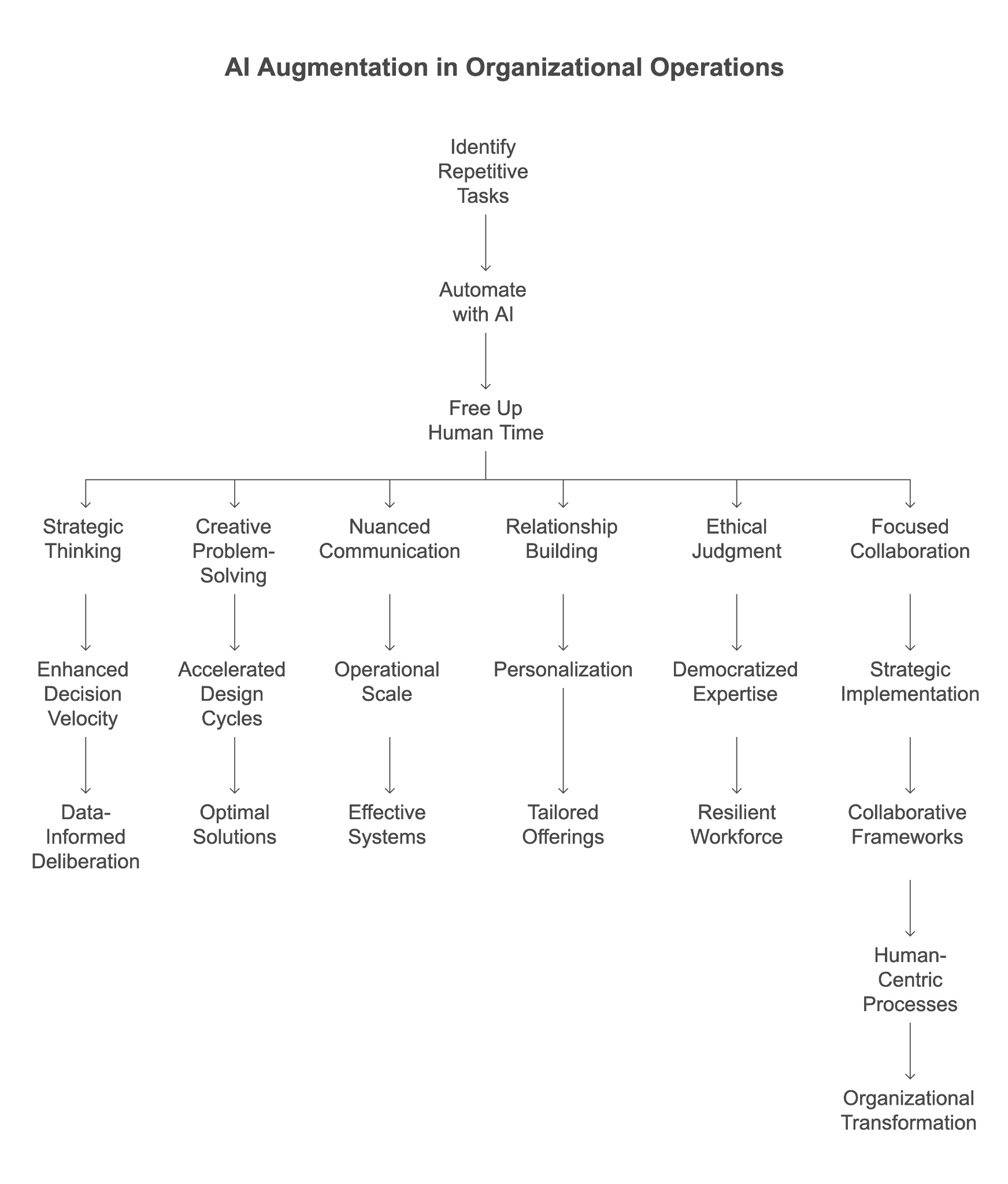
Figure 4.1: AI Augmentation in Action

Figure 4.1: AI Augmentation in Action

Canonical manuscript page 107
Figure 4.2: Digital Teammates

Figure 4.2: Digital Teammates

Canonical manuscript page 109
Figure 4.3: The Cognitor’s Role AI-enhanced Decision-making

Figure 4.3: The Cognitor’s Role AI-enhanced Decision-making

Canonical manuscript page 110
Figure 4.4: Integrated Agentic Workflows

Figure 4.4: Integrated Agentic Workflows

Canonical manuscript page 117
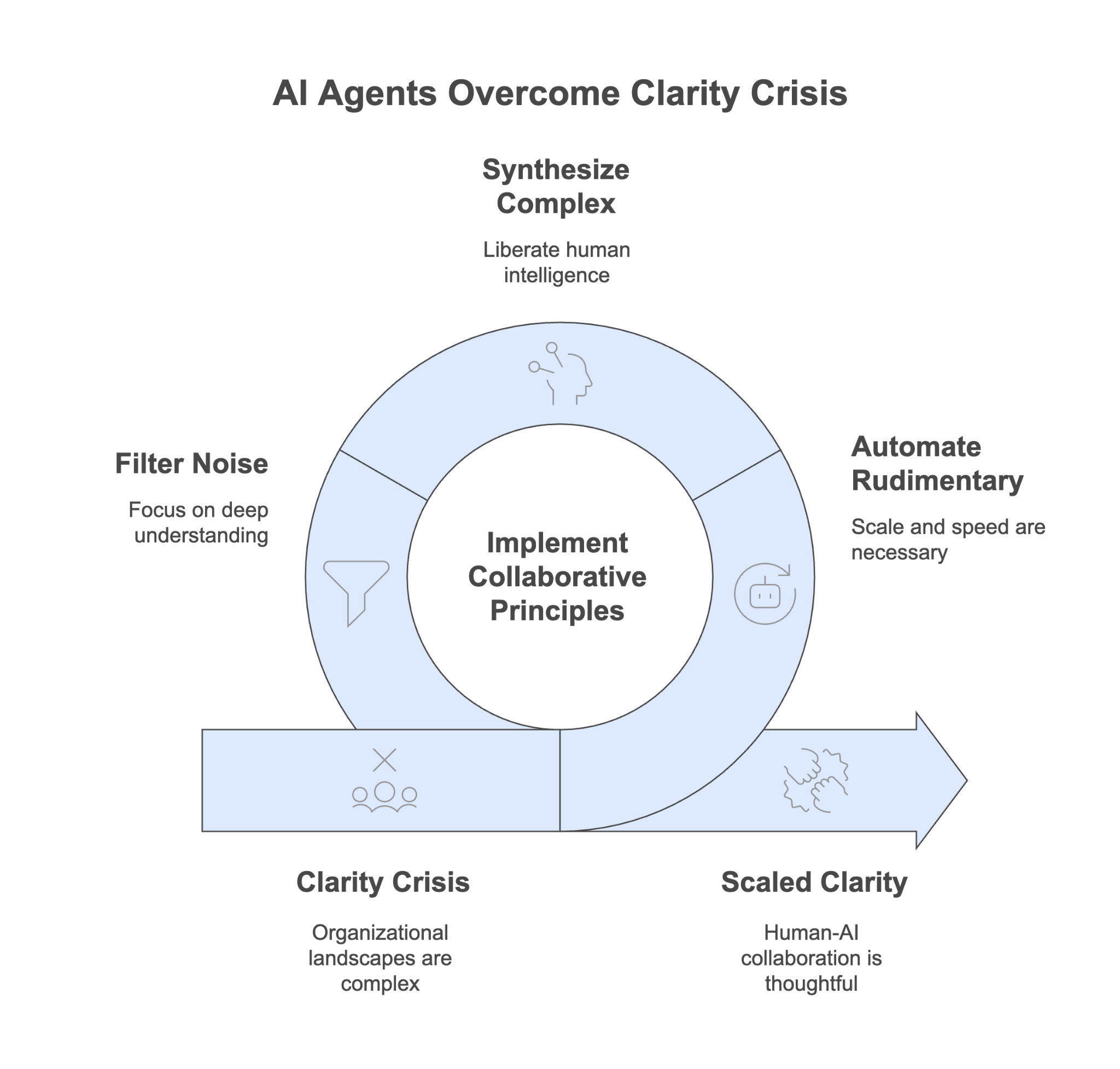
Figure 4.5: Overcoming the Clarity Crisis

Figure 4.5: Overcoming the Clarity Crisis

Canonical manuscript page 119

Source boundary: this companion derives from canonical manuscript pages 103-122. It publishes practice material and selected brief excerpts, not the complete chapter prose or manuscript PDF.