Our history
We did not start by scoring other people's gatherings. We started by reinventing our own.
United We Transform began as a live experiment: a government grant, the world's first AI workspace, and a one-day gathering of more than a thousand people built to test how humans and AI collaborate better together. Some of it worked brilliantly. Some of it did not. All of it is why this atlas exists.
Direct answer: United We Transform built the Agenda Intelligence Atlas after running its own large AI-era gathering, learning that even ambitious event design can fail without clear follow-through, participation architecture, and evidence.
 Watch
Watch
Inside the 2024 gathering that started United We Transform. Plays muted; tap the video to turn on sound.
The timeline
From grant to atlas.
The grantA public bet on better collaboration
United We Transform started with a government grant to explore a simple, stubborn question: in the AI era, can we make the way people gather and work together dramatically more effective?
The ExchangeThe world's first AI workspace
We opened the Exchange in Saint Paul (370 Wabasha Street North): movable walls, writable surfaces, no screens dominating the room, and discreet AI quietly capturing insights in the background so people could stay face to face.
The methodScan, Focus, Act
Inside the Exchange we developed the UWT method: every hour the room Scans (who is here, what changed), Focuses (the core issues), and Acts (moves on decisions immediately), with AI check-ins keeping everyone aligned. The goal: compress months of work into hours.
May 21, 2024The big test: 15 experiments, one day
We gathered roughly a thousand participants (1,245 registered) and ran fifteen live experiments at once: no registration table, no rows of chairs, no fixed agenda, reinvented panels, AI-matched networking, and more. A stress test of everything we believed about gatherings.
The learningsWe published everything, including the failures
7,545 networking interactions were recorded, the most outcome data we can find a record of at any event. We also published what did not work: only 48% of AI networking recommendations were rated positive, our tooling buckled at 500 simultaneous users, and up to 40% of the room was confused at times. The full deck stays live on our learnings site.
TodayFrom one event to the whole field
Running our own experiments taught us how rare real outcome design is, and how hard follow-through is even when you are trying. So we turned the lens outward and scored 23,624 public event agendas. That is this site: the Agenda Intelligence Atlas, plus the Exchanges that now operate as permanent physical spaces.
The concept
The Cognitor: what the experiment eventually named.
The 2024 experiment taught us that pairing people with AI in a room does not happen automatically. Somebody has to design the room on purpose, then check afterward whether it actually worked. Brandon Klein later gave that role a name: the Cognitor, the person who orchestrates human judgment and AI capability together instead of leaving the room to run on autopilot.
He introduced the term first, in a LinkedIn article in May 2025. A month later he and Mark Rowland published it properly, in "Smarter Together," for Duke Corporate Education Insights, June 2025.
This atlas is a Cognitor's instrument: something a person uses to design a gathering with AI, then track what changed because of it. Read the full concept on the Cognitor page.
Proof in action
The 15 experiments: what worked and what did not.
We publish our misses next to our wins, because that is the standard we hold every gathering to. Eight of the fifteen, with the honest results:

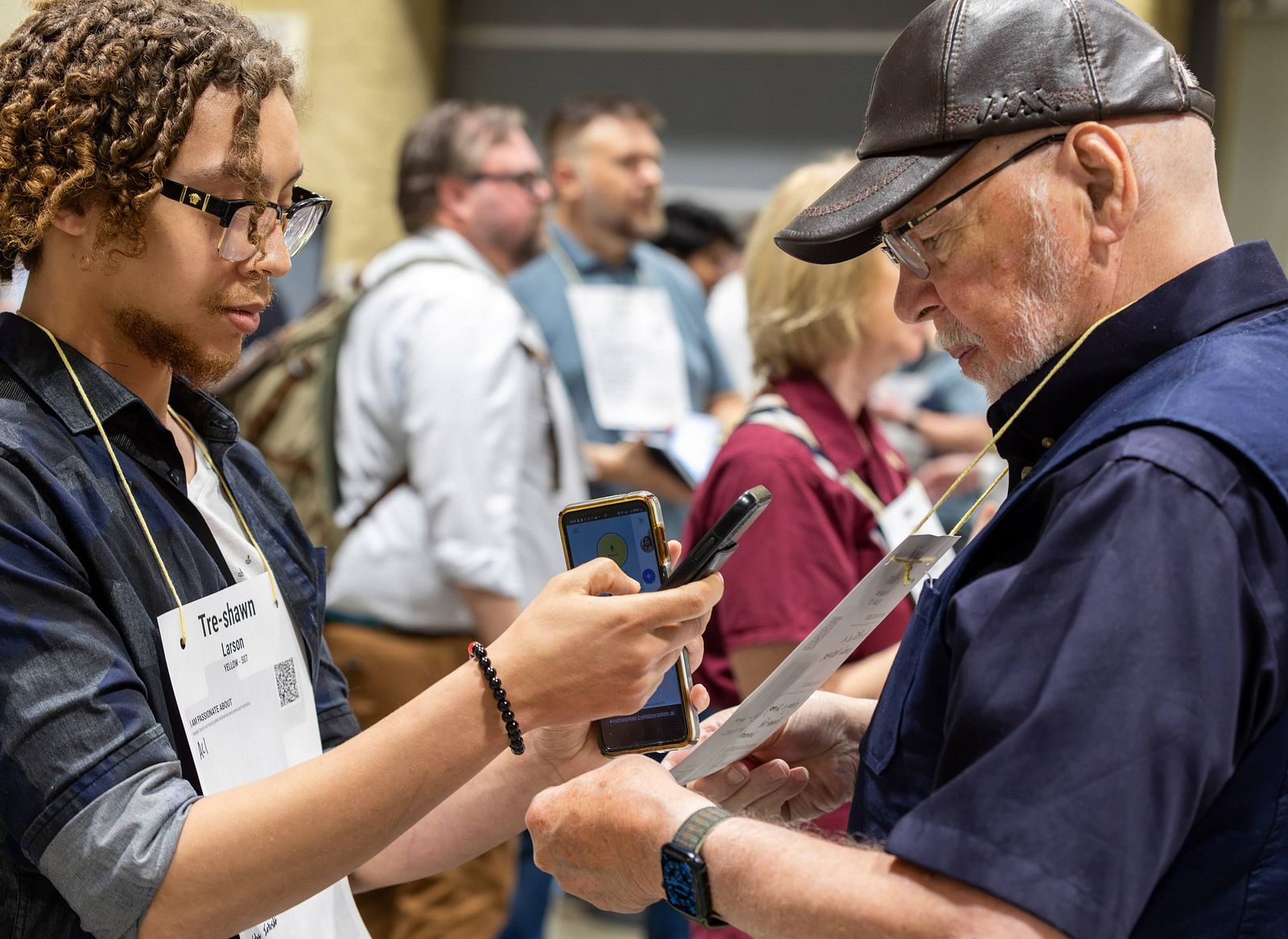
Experiment 1New name tag format
What worked- Very legible, very informative, and genuinely conversation focused.
What did not- Many people did not fill them out well; the large format was slightly cumbersome. Next time: make creating the name tag part of the first exercise.
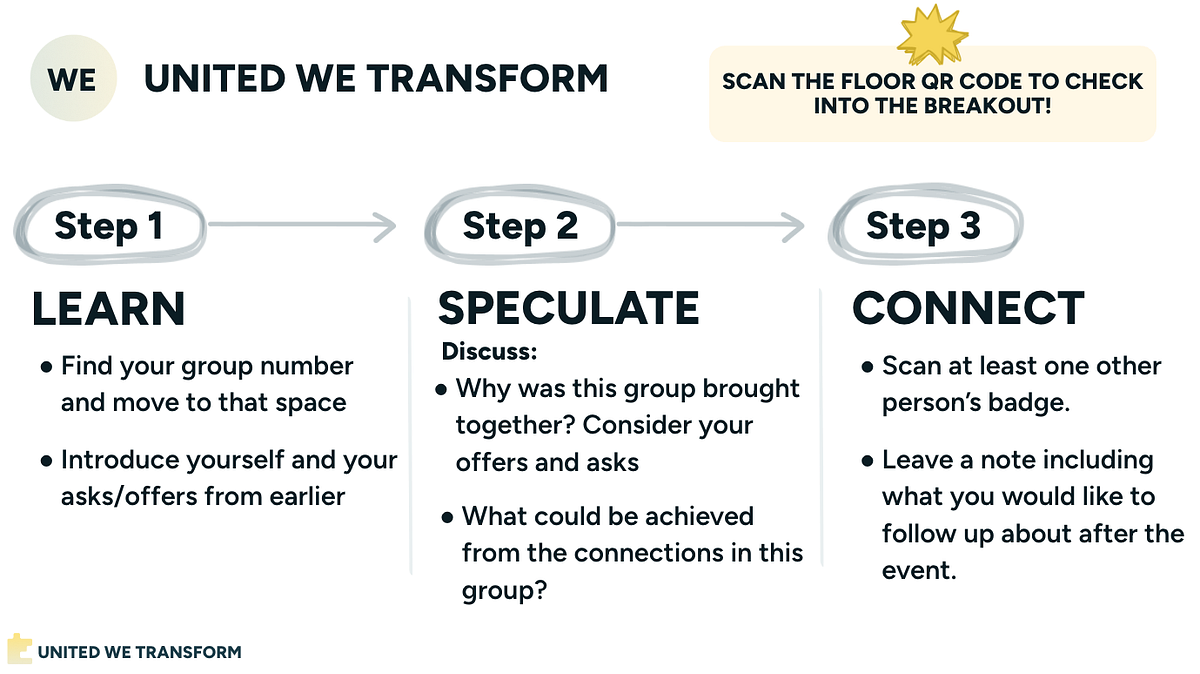
Experiment 3Refundable registration
What worked- 1,245 registered. Refunds were offered up to 72 hours out, with reminder emails two days before; 37 people canceled in advance and were refunded.
What did not- About 200 people still did not show. Manual refund processing was slow; integrate directly with the bank next time.
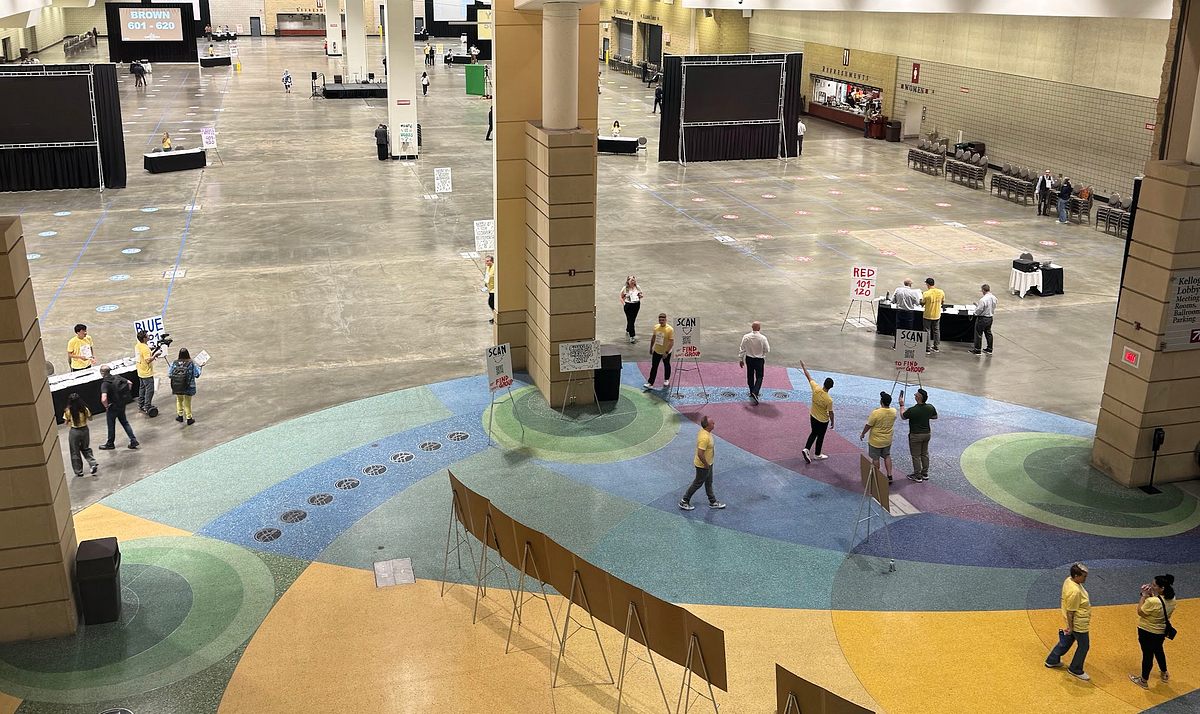
Experiment 4No registration table
What worked- Participants scanned a QR code and picked up their name tag in one of eight sections. Warm greeters set the tone for the day.
What did not- Temporary staff did not always radiate the intended warmth, and the click-to-expand symbols were not as universal as expected; many needed help finding their name.
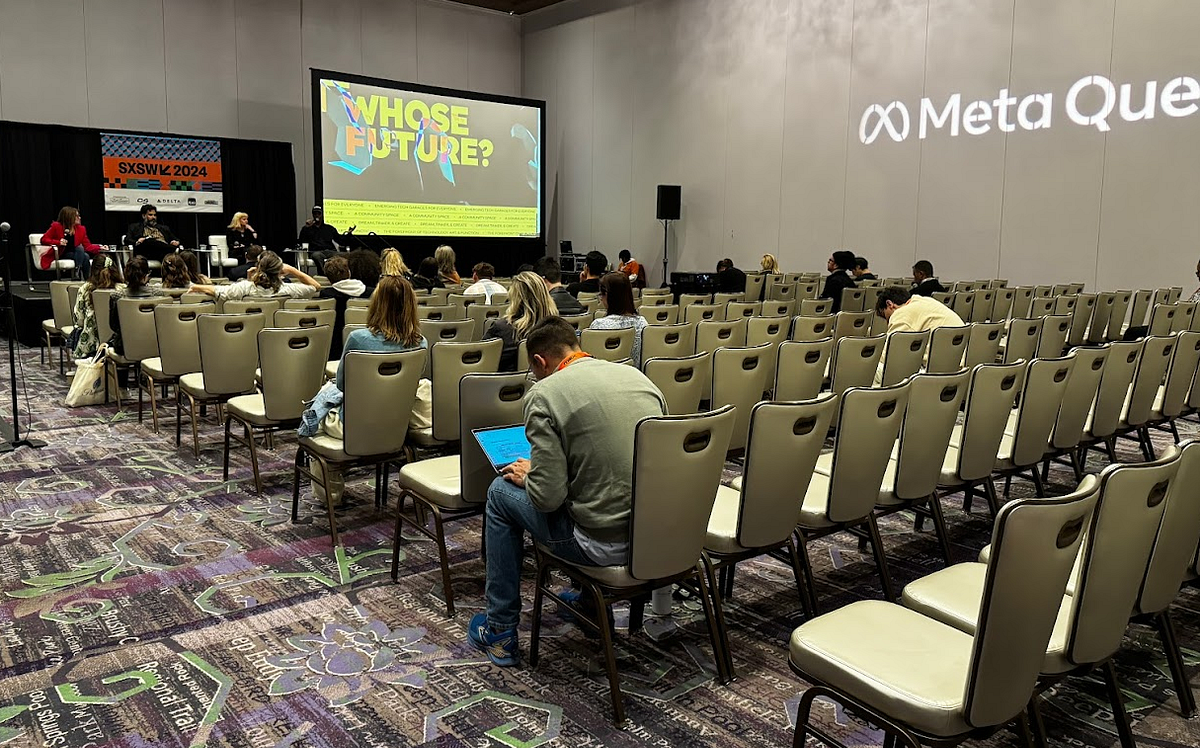
Experiment 5Assignments instead of talks
What worked- Kept most of the room working collaboratively on the same thing and produced specific outputs for follow up.
What did not- Some participants needed more guidance and context, and the sequencing speed was too fast for part of the room.
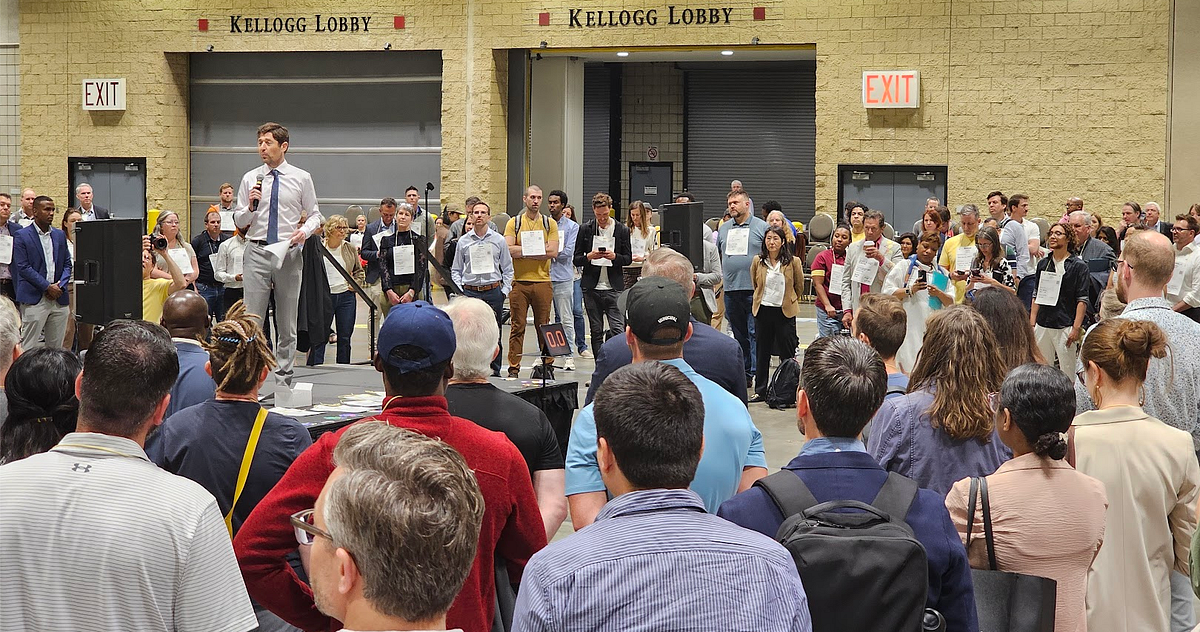
Experiment 7Panels, reinvented
What worked- A net new format for 99% of participants: experts shared with experts, then met participants in small chosen-topic groups. Over 70% reported positive learning and connections; 55% connected with someone in every round, with a 37% statistical likelihood of future collaboration.
What did not- More than 30% of attendees experienced confusion with the new format.
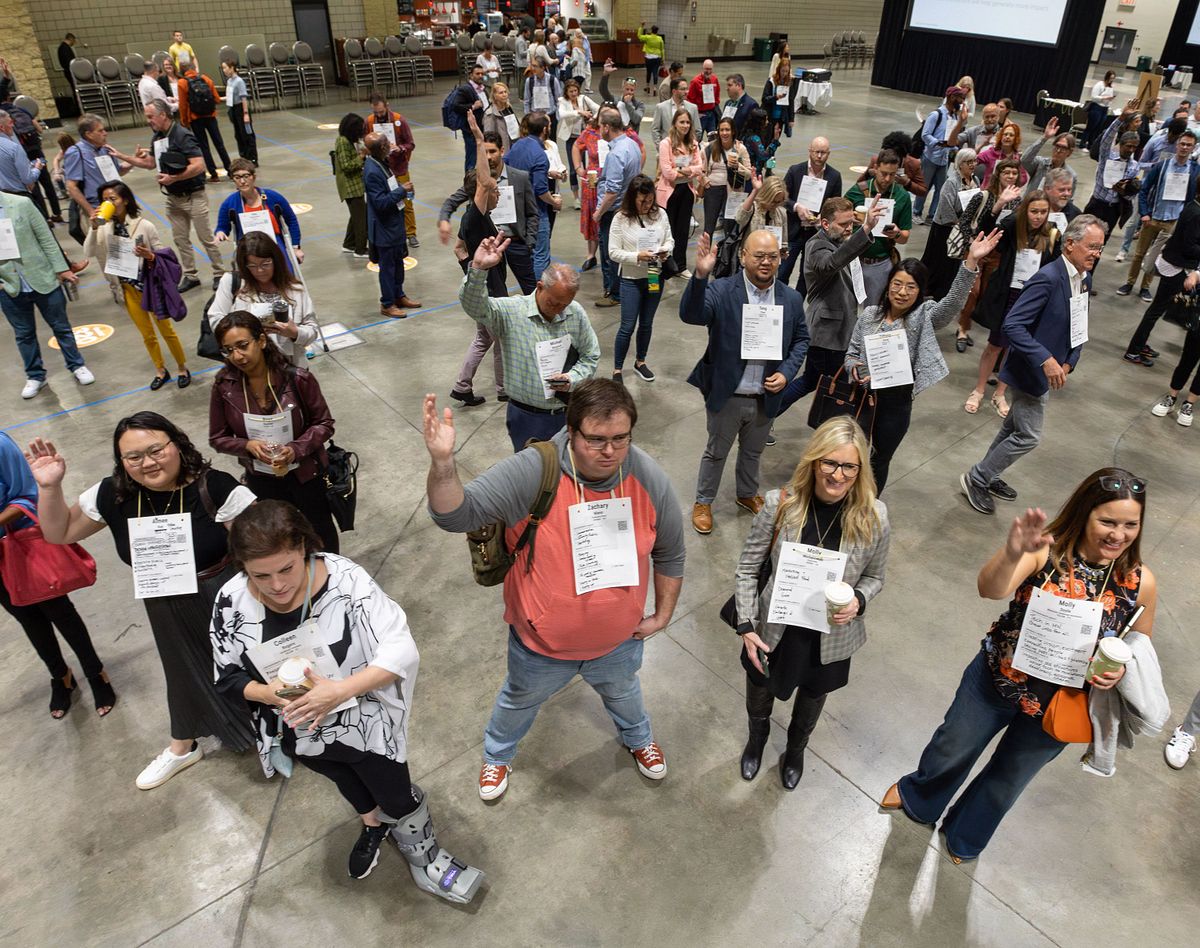
Experiment 11No rows of chairs, no stage
What worked- 85% of people stood and talked for four hours straight; 100% engaged in breakout groups organized by floor tile number.
What did not- Many people did not know they could pick up a chair, and standing fatigue is real; accessibility needs more options.
Experiment 12The no-agenda agenda
What worked- No minute-by-minute schedule was published and nobody complained in advance. Half the event was determined on the fly from direct participant requests, processed live by AI, and connections and learning points only increased.
What did not- Up to 40% of participants were confused at times. Nobody resisted or left, but clarity needs work.
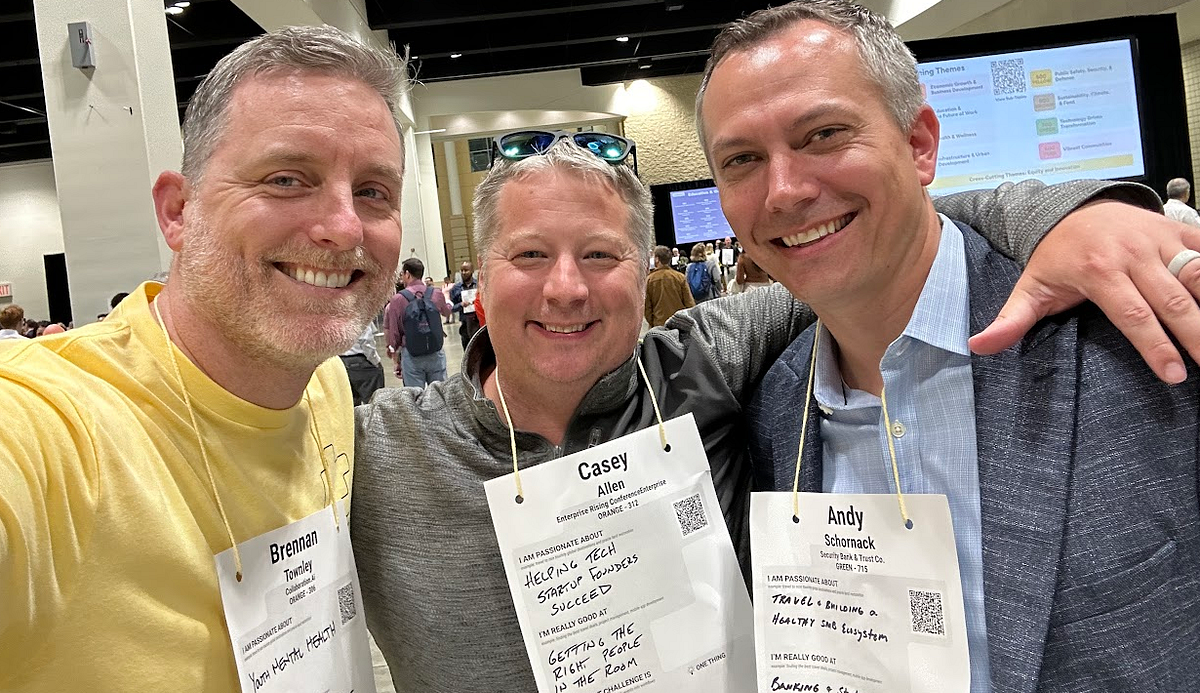
Experiment 14Reinventing networking
What worked- 7,545 networking interactions were recorded, the most outcome data we can find a record of at any event. 90% of participants scanned at least one other person.
What did not- Human nature still defaulted to talking to similar people. Only 48% of AI-generated networking recommendations were rated positive, and the AI tooling hit a 500-person simultaneous usage limit, leaving many with spinning screens.
The other seven, detailed in the full learnings deck:
Experiment 2: Event signageExperiment 6: SwagExperiment 8: SpeechesExperiment 9: AI-written biosExperiment 10: Topics and event contentExperiment 13: Diversity in teamsExperiment 15: New breakout models
Why it matters now
That event is why this atlas exists.
We learned firsthand that designing a gathering for outcomes is brutally hard: even with AI in the room and every convention questioned, follow-through was our weakest result. When we later scored 23,624 public agendas, we found the whole field shares that gap: follow-through averages 5.8 out of 100. The atlas, the Gathering Effectiveness Score, and the free grader are the tools we wish we had before May 21, 2024.
What changed after the experiment?
The work moved from a single room to a public benchmark. Instead of telling event teams to copy our format, we built a way to read any public agenda for visible mechanisms: participant work, learning transfer, network design, commitments, tracking, and evidence. The history matters because the atlas is not abstract commentary; it came from trying, measuring, missing, and then making the standard public.
History FAQ
Why does United We Transform publish failures?
Because the same trust rule applies to us: useful gathering design needs visible evidence, not just a polished story.
How does the 2024 gathering connect to GES?
The 2024 experiment made follow-through and outcome evidence painfully concrete, which shaped the eight-pillar Gathering Effectiveness Score used across the atlas.