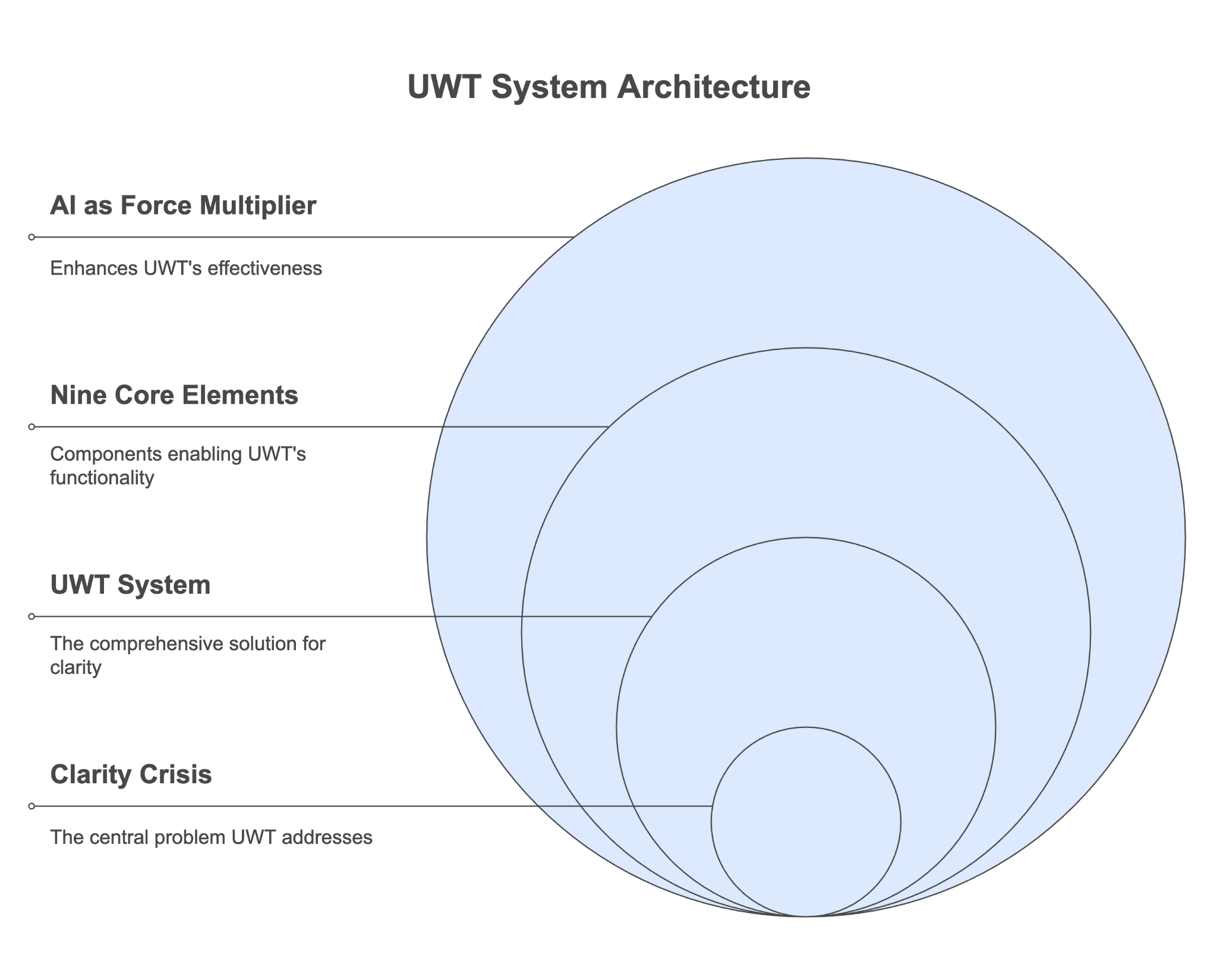
The nine UWT elements operate as one system; changing one element affects the others.
Source page 56, 62
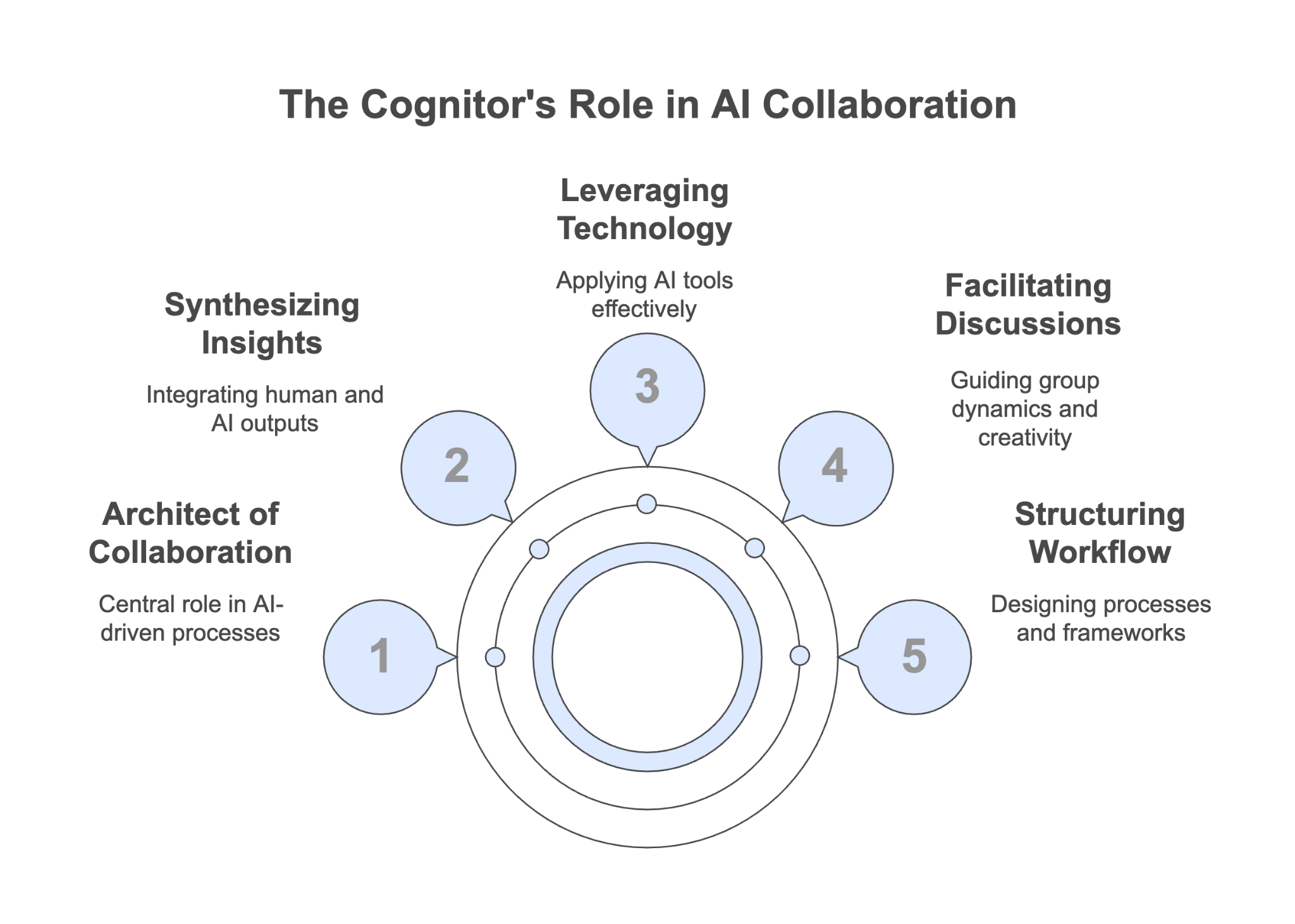
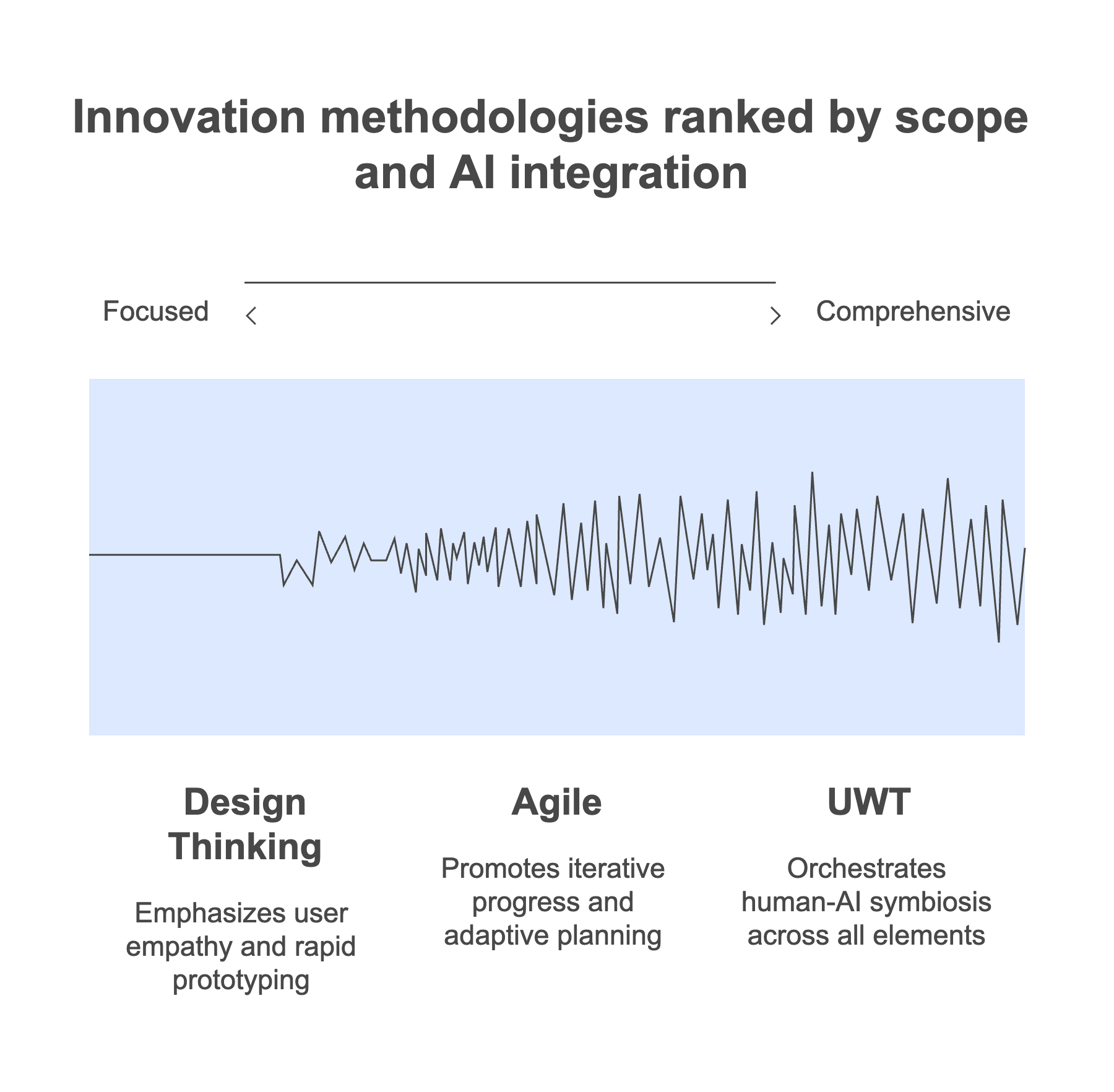
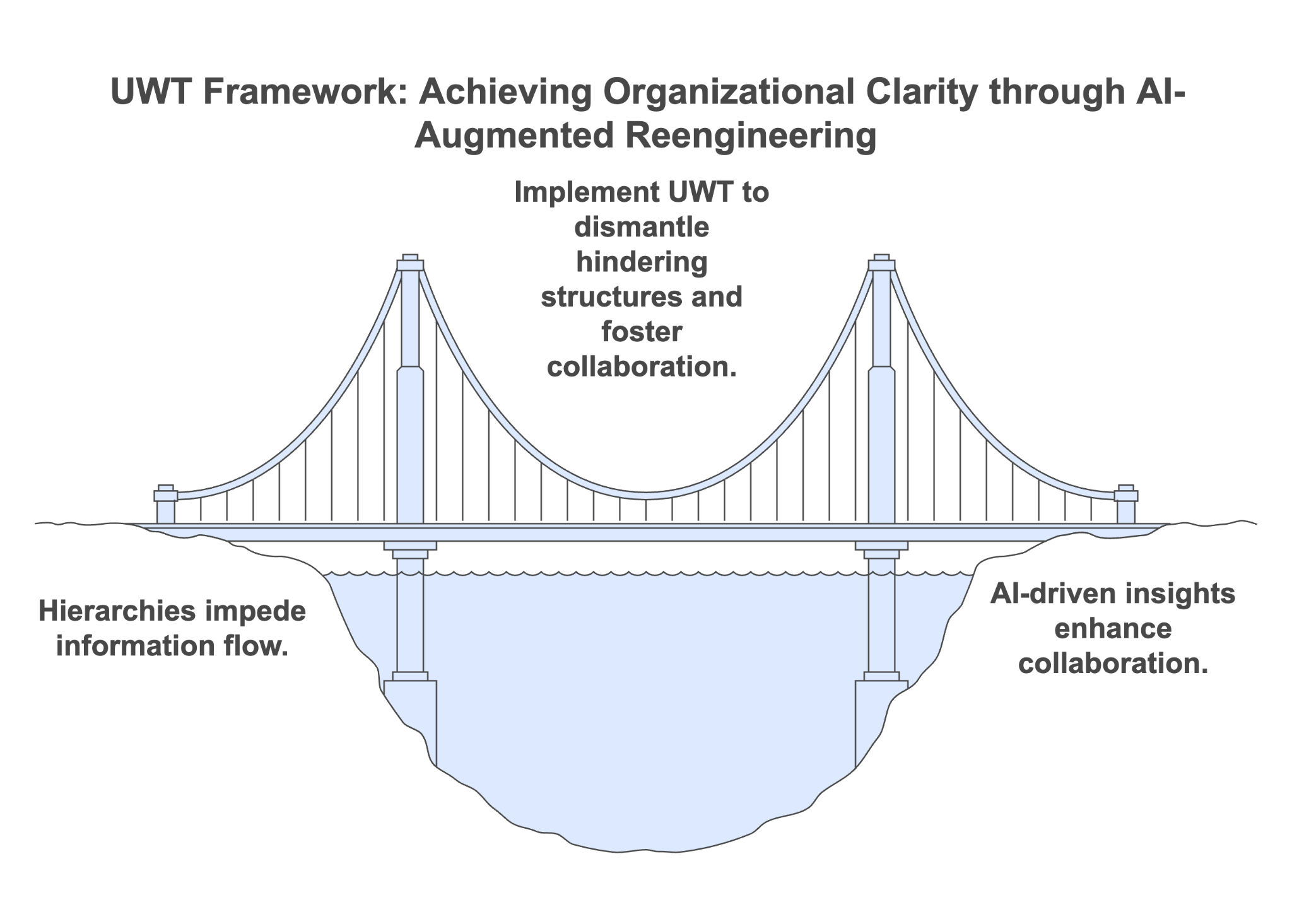
Defines UWT as an integrated organizational operating system rather than a stand-alone workshop method. It explains the nine mutually reinforcing elements, formally introduces the Cognitor, positions UWT alongside Design Thinking and Agile, and argues for redesigning structures and habits that perpetuate ambiguity.
Concise companion summaries with canonical source pages.
Source page 56, 62
Source page 62, 64
Source page 64, 73
Source page 74, 80
Use these as an orientation layer before the diagrams and practice prompts.
A nine-element architecture for synchronizing strategy, stakeholders, human roles, AI, data, workflows, measures, and culture around a shared destination.
Source page 55, 64
Destination; Strategic Bets; Impact Metrics; Stakeholders & Value; Human Roles; AI Agents & Tools; Data & Knowledge; Flow & Process; and Culture & Ethics.
Source page 56, 62
The principle that teams should confront and remove entrenched ambiguity-producing habits and structures instead of using AI to automate them.
Source page 76, 80
Three immediate actions, three AI levers, and three critical reflection questions exactly as structured in the chapter.
Every associated framework is available at source resolution.
Source boundary: this companion derives from canonical manuscript pages 54-83. It publishes practice material and selected brief excerpts, not the complete chapter prose or manuscript PDF.